
Supplement-Grade Glutathione Was Used in Injections. At Least 30 People Reported Adverse Events.
Published on:
Updated on:
People are asking...
Do you also supply growth hormone with TRT? Why or why not?...
No, it isn't offered. Reason: Because the DEA could get pissed off and send prescribers to jail. Off-label use of GH is illegal in the USA . And GH can only be prescribed for two things in adults on-... See Full Answer
I'm a 36-year-old male, I've been on TRT for hypogonadism for about 10 years now. The TRT specialist/internist I was getting treatment with, emigrate...
We hear a story like yours all the time. GP’s have a lot of things they have to keep up on. New treatments for diabetes, new diagnostics for rheumatic conditions, new screening rules for breast cance... See Full Answer
I experienced injection site hives when using Hikma brand testosterone cypionate, other brands were fine for me...
Being that it's a commercial brand & since I can't tell by doing a simple search, it's very likely that they have cottonseed oil as their carrier oil & others you may have tried may have used Grapesee... See Full Answer
Have a question? Ask us.
At AlphaMD, we're here to help. Feel free to ask us any question you would like about TRT, medical weightloss, ED, or other topics related to men's health. Or take a moment to browse through our past questions.
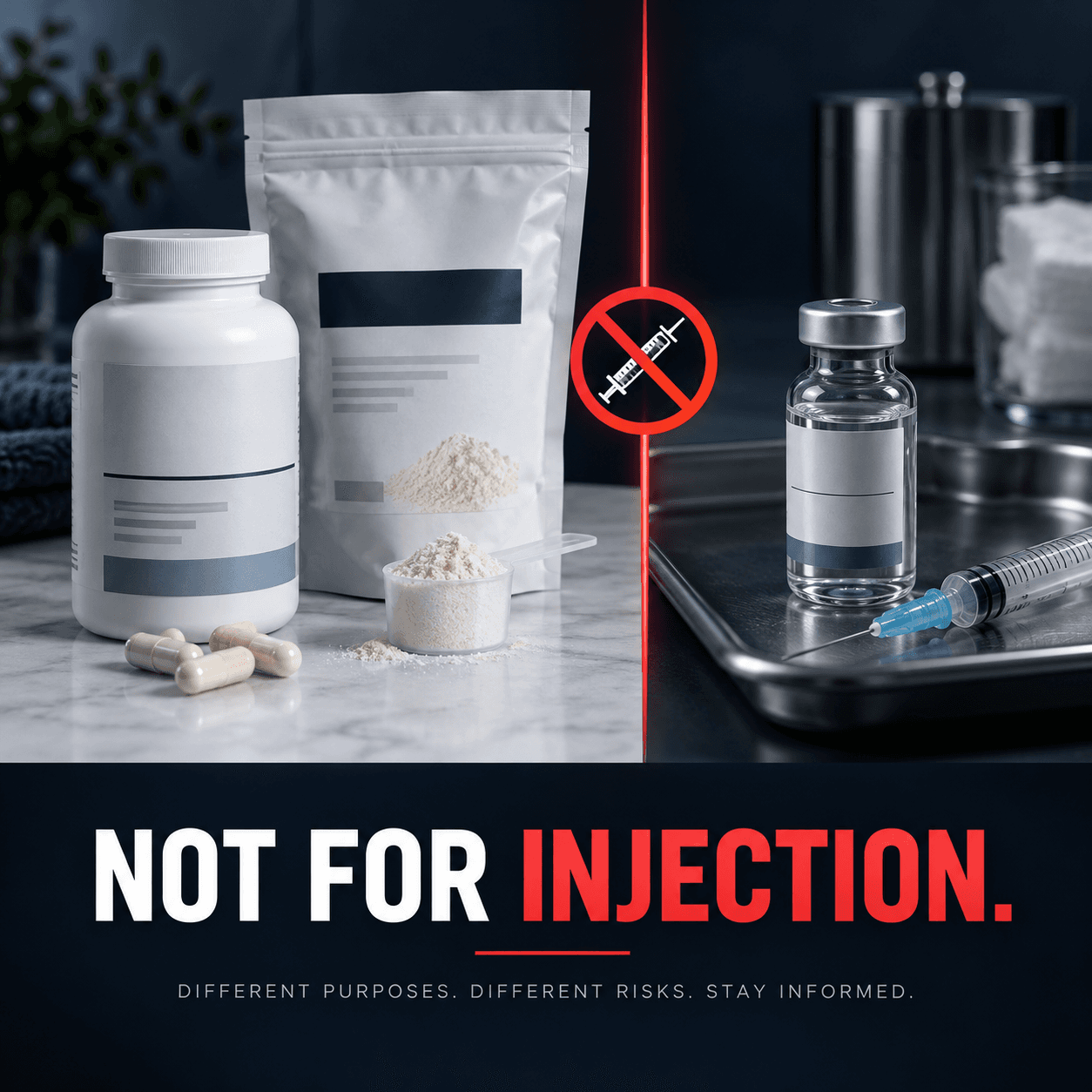
The FDA has warned compounders not to use dietary supplement-grade glutathione to make injectable products. The agency linked products made from an unsuitable lot to at least 30 adverse events, including reactions serious enough to require hospital care.
The alert is not a verdict on every oral supplement or every professionally compounded preparation. It shows why a substance's grade, supplier, testing, sterility, and route of administration matter as much as the name printed on the label.
What Happened?
In an August 2026 safety reminder to compounders, FDA described adverse events associated with injectable glutathione products made using dietary supplement-grade material.
FDA testing found excessive endotoxin in samples. Endotoxins are components from certain bacteria that can trigger fever, chills, low blood pressure, pain, and severe systemic reactions when introduced into the bloodstream.
An oral product and an injectable product face very different safety requirements. The digestive tract provides barriers that an injection bypasses. Material intended for oral use should not be assumed suitable for sterile injection.
What Does “Supplement Grade” Mean Here?
“Supplement grade” is a market description, not a guarantee that an ingredient meets the requirements for injectable drug manufacturing. A supplier may sell material suitable for oral capsules or powders without testing and controls needed for parenteral use.
Injectable preparation requires control of microbial contamination, endotoxin, particulate matter, identity, potency, stability, and sterility. A certificate of analysis is useful only when the tests, specifications, methods, lot identity, and supplier controls are appropriate and trustworthy.
Changing the route changes the risk. The same principle applies to vitamins, amino acids, peptides, and other substances promoted across oral, topical, and injectable products.
Why Can Endotoxin Survive Compounding?
Sterility and endotoxin are related but different. A sterile product can still contain endotoxin because standard sterilization may kill bacteria without removing the bacterial components that trigger reactions.
Compounders need suitable starting material, validated processes, environmental controls, appropriate testing, and proper storage. Filtering a final solution does not automatically solve an upstream ingredient problem.
Does This Mean Glutathione Itself Caused Every Reaction?
The FDA alert focused on injectable products made with an inappropriate grade and a contaminated ingredient lot. The reported events therefore cannot be simplified into a universal statement that the glutathione molecule is inherently responsible for every reaction.
The distinction matters clinically. Product quality, excipients, concentration, route, administration rate, handling, and patient factors can all influence adverse events. The alert supports avoiding unsuitable material. It does not establish broad benefits or safety for other glutathione products.
Are Glutathione Injections FDA Approved for Wellness Uses?
An FDA warning about a compounded product does not create an approval. Consumers should verify whether a specific product and use are FDA approved rather than assuming that pharmacy preparation or clinician availability means the FDA evaluated it for effectiveness.
Compounded drugs are not reviewed by FDA for safety, effectiveness, and manufacturing quality in the same way as FDA-approved drugs. Compounding can have a legitimate clinical role, but it carries different oversight and product-quality considerations.
What Should Patients Ask Before an Injection?
Useful questions include:
- What is the intended medical purpose?
- Is the product FDA approved for that use?
- If it is compounded, which pharmacy prepared it?
- Was the ingredient suitable for injection?
- What adverse reactions require urgent care?
- How are sterility and endotoxin controlled?
Patients should not attempt to inject products labeled for oral or dietary-supplement use. They should also report fever, shaking chills, breathing difficulty, severe weakness, fainting, or other acute symptoms after an injection to a clinician promptly.
What Does This Have to Do With TRT and Optimization?
Men using TRT often encounter injectable add-ons marketed for recovery, energy, detoxification, or longevity. Familiarity can make an ingredient feel routine. The route and product quality still determine much of the risk.
A large wellness menu is not proof that every injectable belongs in a treatment plan. Each substance needs a clear purpose, evidence appropriate to that purpose, and a product source suitable for the route.
Frequently Asked Questions
Can dietary supplement powder be used to make an injection?
No. Material intended for oral supplement use should not be assumed suitable for injection.
Does sterile mean endotoxin-free?
No. A product can contain no living bacteria and still contain bacterial endotoxin.
Did FDA ban all glutathione products?
The 2026 reminder warned compounders against using dietary supplement-grade glutathione for injectable products. It should not be rewritten as a universal ban on every form.
Are compounded injections FDA approved?
Compounded drugs are not FDA approved. A licensed clinician and pharmacy still have responsibilities for clinical appropriateness and product quality.
Key Takeaway
The FDA alert involved a route and quality failure: dietary supplement-grade material was used to prepare injections, and excessive endotoxin was found. Ingredient names do not erase manufacturing standards. An injectable product requires controls designed for injection.
This article is educational and is not medical advice. Product safety and treatment decisions should be reviewed with an appropriately licensed clinician and pharmacist.
Have a question? Ask us.
At AlphaMD, we're here to help. Feel free to ask us any question you would like about TRT, medical weightloss, ED, or other topics related to men's health. Or take a moment to browse through our past questions.
People are asking...
Do you also supply growth hormone with TRT? Why or why not?...
No, it isn't offered. Reason: Because the DEA could get pissed off and send prescribers to jail. Off-label use of GH is illegal in the USA . And GH can only be prescribed for two things in adults on-... See Full Answer
I'm a 36-year-old male, I've been on TRT for hypogonadism for about 10 years now. The TRT specialist/internist I was getting treatment with, emigrate...
We hear a story like yours all the time. GP’s have a lot of things they have to keep up on. New treatments for diabetes, new diagnostics for rheumatic conditions, new screening rules for breast cance... See Full Answer
I experienced injection site hives when using Hikma brand testosterone cypionate, other brands were fine for me...
Being that it's a commercial brand & since I can't tell by doing a simple search, it's very likely that they have cottonseed oil as their carrier oil & others you may have tried may have used Grapesee... See Full Answer
Get $30 off your first month’s order
Enter your email address now to receive $30 off your first month’s cost, other discounts, and additional information about TRT.
Legal Disclaimer
This website is a repository of publicly available information and is not intended to form a physician-patient relationship with any individual. The content of this website is for informational purposes only. The information presented on this website is not intended to take the place of your personal physician's advice and is not intended to diagnose, treat, cure, or prevent any disease. Discuss this information with your own physician or healthcare provider to determine what is right for you. All information is intended for your general knowledge only and is not a substitute for medical advice or treatment for specific medical conditions. The information contained herein is presented in summary form only and intended to provide broad consumer understanding and knowledge. The information should not be considered complete and should not be used in place of a visit, phone or telemedicine call, consultation or advice of your physician or other healthcare provider. Only a qualified physician in your state can determine if you qualify for and should undertake treatment.