
Ultra-Processed Food, Testosterone, and Sperm: The Viral Claim Is Bigger Than the Trial
Published on:
Updated on:
People are asking...
Are there any studies about TRT affecting sperm quality? I know about motility and sperm count. I mean specifically like denaturing of the sperm quali...
Testosterone does not cause birth defects. Remember what you are injecting is the same substance that has been coursing through your body every single day since birth, testosterone. hCG also does not ... See Full Answer
Your 'expert' Finasteride video: https://www.youtube.com/watch?v=mKum5L64cPk @ 2:07 Your 'expert' dudebro says serum DHT concentrations were 100 time...
He did misspeak, thank you for pointing that out. Yes, DRUG concentrations were >100 less with the topical vs the oral version of finasteride. As always, our YouTube channel is an informal venue, and ... See Full Answer
What are your thoughts on phthalates affecting the endocrine system? And on a personal level, has what you've learned about them caused you to try to ...
Phthalates are just one of many, many chemicals assaulting our endocrine systems in this modern world. Phthalates are found in drinking water (both tap and bottled), shampoo, soap, hair spray, skin mo... See Full Answer
Have a question? Ask us.
At AlphaMD, we're here to help. Feel free to ask us any question you would like about TRT, medical weightloss, ED, or other topics related to men's health. Or take a moment to browse through our past questions.
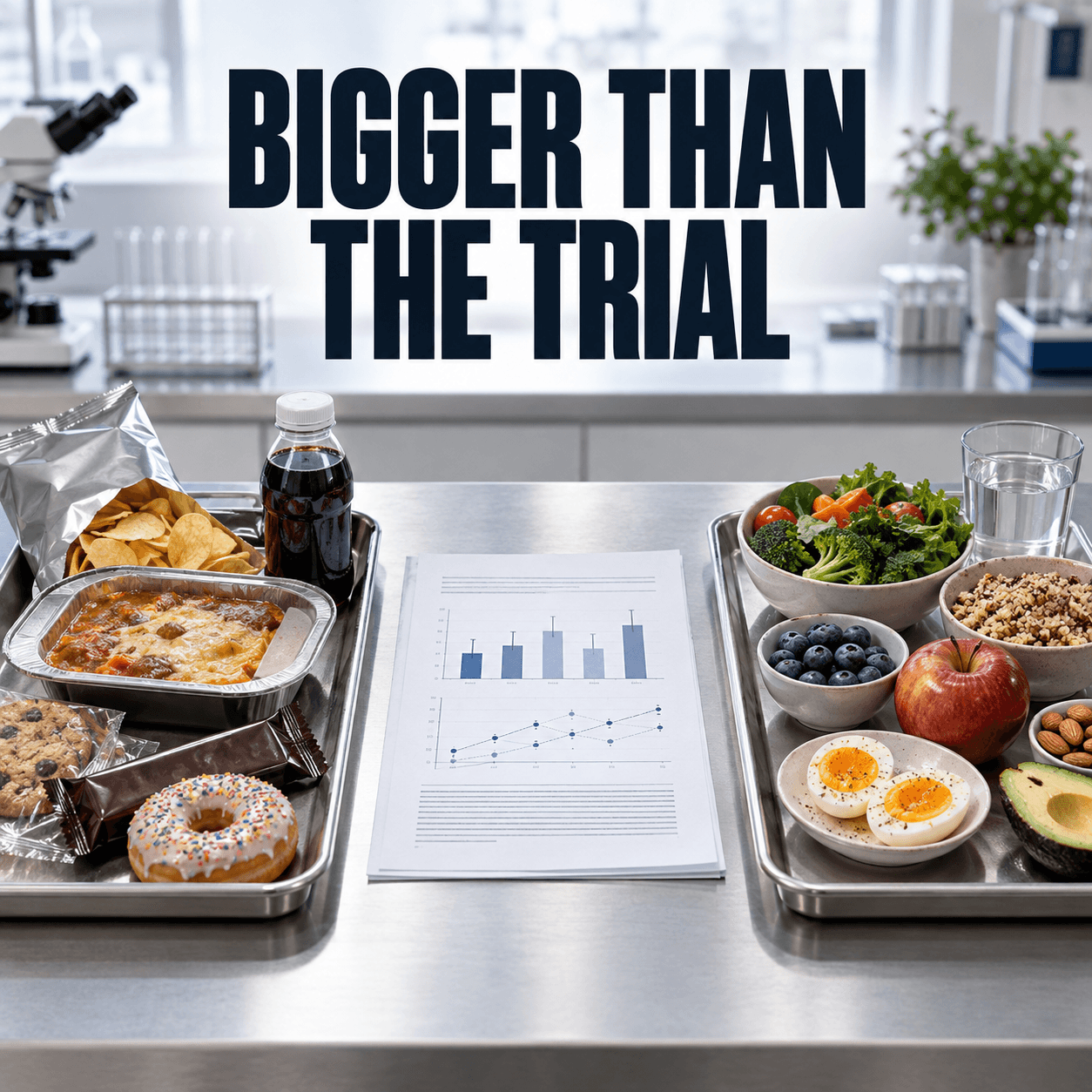
The viral version is blunt: ultra-processed food lowers testosterone and damages sperm even when calories are controlled. The actual study is more interesting and more limited.
In a controlled crossover trial of ultra-processed food and male reproductive health, healthy young men consumed ultra-processed and unprocessed diets under different calorie conditions. Compared with the unprocessed diet, the ultra-processed diet increased body weight and worsened the LDL-to-HDL cholesterol ratio independent of calorie load. Follicle-stimulating hormone decreased, and total sperm motility moved in an unfavorable direction.
Those findings deserve attention. They do not prove that every packaged food suppresses testosterone or that a brief dietary exposure causes infertility.
“Ultra-Processed” Describes a Dietary Pattern, Not One Ingredient
Ultra-processed foods are industrial formulations that commonly combine refined ingredients, additives, flavor systems, and processing techniques that differ substantially from ordinary home cooking. The category includes products with very different nutrient profiles.
That creates a communication problem. A result from an ultra-processed dietary pattern cannot automatically identify the responsible mechanism. Possible contributors include food structure, energy density, fat and carbohydrate quality, packaging exposure, additives, displacement of whole foods, or interactions among several factors.
The trial detected differences in some chemical exposures between diets, including a trend involving a phthalate metabolite. That is a hypothesis-generating clue, not proof that one contaminant caused the reproductive findings.
The Sperm Finding Was a Signal, Not a Fertility Verdict
Total motility declined during the ultra-processed diet condition, but the authors described sperm quality as trending toward impairment. Semen parameters are variable, and a short-term change does not directly establish reduced pregnancy or live-birth rates.
Follicle-stimulating hormone also decreased. That hormone contributes to sperm production, but one hormonal movement cannot be used to diagnose infertility or predict a couple’s outcome.
A 2026 review of ultra-processed food and male reproductive function concluded that current evidence raises concern but remains limited. The most defensible conclusion is that a tightly controlled short-term diet study found unfavorable cardiometabolic and reproductive signals worth replicating.
Where Testosterone Fits
The study was not a trial of TRT, and it does not show that diet should replace appropriate evaluation or treatment for confirmed testosterone deficiency.
Diet can influence body weight, insulin sensitivity, sleep, cardiovascular health, and other variables that intersect with testosterone. Improving food quality may support the metabolic environment around hormonal health. It should not be sold as a guaranteed way to raise testosterone or restore fertility.
Men taking testosterone also need to know that exogenous testosterone can suppress sperm production. A cleaner diet does not cancel that pharmacology. Anyone who may want biological children should discuss fertility goals with a licensed clinician before starting or changing hormone treatment. AlphaMD’s guide to TRT and fertility explains why that conversation should happen early.
A Practical Interpretation
The trial does not require a purity contest or a ban on every packaged product. It supports a more durable principle:
- Build most meals around recognizable minimally processed foods.
- Use packaged foods strategically rather than automatically.
- Compare protein, fiber, energy density, fat quality, sodium, and added sugar instead of relying only on front-label health claims.
- Treat fertility concerns as a clinical question, not a nutrition-influencer diagnosis.
The Bottom Line
The controlled trial strengthens the case that food processing and food formulation may matter beyond calories alone. It does not prove that one snack causes low testosterone or infertility. The credible takeaway is to improve the overall dietary pattern while waiting for longer studies that connect short-term markers with reproductive outcomes.
This article is for educational purposes and is not medical advice. Persistent fertility concerns warrant evaluation by an appropriately licensed clinician.
Have a question? Ask us.
At AlphaMD, we're here to help. Feel free to ask us any question you would like about TRT, medical weightloss, ED, or other topics related to men's health. Or take a moment to browse through our past questions.
People are asking...
Are there any studies about TRT affecting sperm quality? I know about motility and sperm count. I mean specifically like denaturing of the sperm quali...
Testosterone does not cause birth defects. Remember what you are injecting is the same substance that has been coursing through your body every single day since birth, testosterone. hCG also does not ... See Full Answer
Your 'expert' Finasteride video: https://www.youtube.com/watch?v=mKum5L64cPk @ 2:07 Your 'expert' dudebro says serum DHT concentrations were 100 time...
He did misspeak, thank you for pointing that out. Yes, DRUG concentrations were >100 less with the topical vs the oral version of finasteride. As always, our YouTube channel is an informal venue, and ... See Full Answer
What are your thoughts on phthalates affecting the endocrine system? And on a personal level, has what you've learned about them caused you to try to ...
Phthalates are just one of many, many chemicals assaulting our endocrine systems in this modern world. Phthalates are found in drinking water (both tap and bottled), shampoo, soap, hair spray, skin mo... See Full Answer
Get $30 off your first month’s order
Enter your email address now to receive $30 off your first month’s cost, other discounts, and additional information about TRT.
Legal Disclaimer
This website is a repository of publicly available information and is not intended to form a physician-patient relationship with any individual. The content of this website is for informational purposes only. The information presented on this website is not intended to take the place of your personal physician's advice and is not intended to diagnose, treat, cure, or prevent any disease. Discuss this information with your own physician or healthcare provider to determine what is right for you. All information is intended for your general knowledge only and is not a substitute for medical advice or treatment for specific medical conditions. The information contained herein is presented in summary form only and intended to provide broad consumer understanding and knowledge. The information should not be considered complete and should not be used in place of a visit, phone or telemedicine call, consultation or advice of your physician or other healthcare provider. Only a qualified physician in your state can determine if you qualify for and should undertake treatment.