Updated on July 23rd, 2025
Hormonal imbalances can have a significant impact on reproductive health, energy levels, and overall well-being. Two commonly discussed medications in the realm of hormone therapy are enclomiphene and clomiphene. While both drugs have similarities, they function differently and are used for distinct medical purposes. This article will explore the differences between enclomiphene and clomiphene, their mechanisms of action, and their potential benefits.
What Are Clomiphene and Enclomiphene?
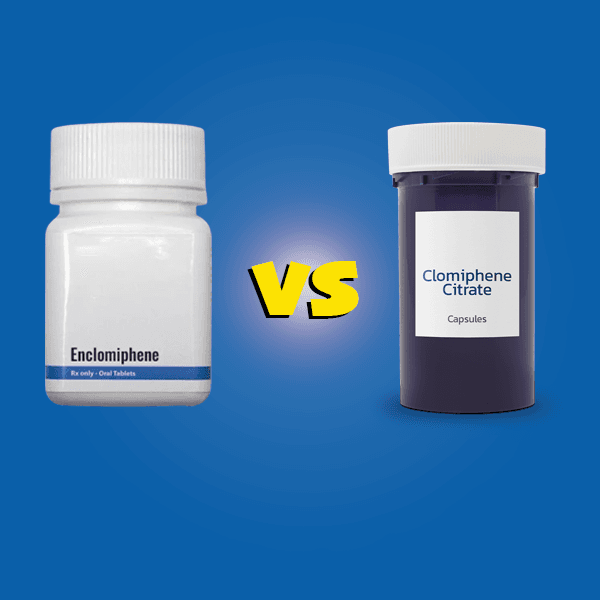
Clomiphene citrate, often prescribed under brand names like Clomid, is a selective estrogen receptor modulator (SERM) commonly used to treat infertility in both men and women. It works by blocking estrogen receptors in the brain, stimulating the release of follicle-stimulating hormone (FSH) and luteinizing hormone (LH). These hormones encourage ovulation in women and testosterone production in men.
Enclomiphene, a purified and more targeted version of clomiphene, is a newer medication specifically designed for men experiencing low testosterone (low T). Unlike traditional clomiphene, which contains both enclomiphene and zuclomiphene (an estrogenic isomer), enclomiphene consists only of the active component responsible for stimulating testosterone production without increasing estrogenic side effects.
How Do They Work?
- Clomiphene: Contains a mixture of two isomers—enclomiphene and zuclomiphene. While enclomiphene helps stimulate testosterone production, zuclomiphene has estrogenic effects that may lead to undesirable side effects such as mood swings, fatigue, and gynecomastia (male breast tissue growth).
- Enclomiphene: Isolates only the beneficial isomer, effectively increasing testosterone levels while minimizing estrogen-related side effects. This makes it a preferred option for men seeking hormonal balance without unwanted complications.
Key Differences Between Enclomiphene and Clomiphene
Feature | Clomiphene | Enclomiphene |
Composition | Mixture of enclomiphene and zuclomiphene | Pure enclomiphene |
Main Use | Fertility treatment in men and women | Testosterone therapy for men |
Estrogenic Effects | Possible due to zuclomiphene | Minimal to none |
Side Effects | Mood swings, hot flashes, gynecomastia, vision changes | Fewer estrogen-related effects |
Effectiveness for Low T | Can work but has more side effects | More targeted and effective |
Which One Is Right for You?
For women seeking fertility treatment, clomiphene remains the standard option. However, for men looking to restore natural testosterone levels without resorting to traditional testosterone replacement therapy (TRT), enclomiphene is often the superior choice due to its targeted effects and reduced estrogenic activity.
Doctors may still prescribe clomiphene for men with low T, but the presence of zuclomiphene increases the risk of unwanted side effects. Enclomiphene, by contrast, is designed to offer the benefits of testosterone stimulation without the drawbacks of its predecessor.
Final Thoughts
Both enclomiphene and clomiphene have important roles in hormonal therapy, but their differences are significant when choosing the right treatment for specific needs. For men struggling with low testosterone, enclomiphene offers a refined and effective solution without the estrogenic side effects associated with clomiphene.
Through AlphaMD, licensed providers offer personalized hormone therapy, including evidence-based treatments for testosterone optimization. Our online telehealth services make it easy for patients to access expert care and medication delivery from the comfort of their homes. If you're exploring options for testosterone therapy, our team is here to help you navigate your journey with confidence.