
Fibermaxxing on TRT: What Psyllium Can and Cannot Do
Published on:
People are asking...
What you are doing is awesome guys! I would highly appreciate your input on my case. I have been working out in the gym/calisthenics/swimming/jogging...
To answer your questions in order: Varicocele is one of the only truly reversible causes of hypogonadism. It is a fairly minor procedure, so if you can get it taken care of now, there is a possibility... See Full Answer
I am 42 and have been unable to lose weight or build muscle for years now even working with trainers and nutritionists. Semagultide makes me horribly ...
Providers on the AlphaMD platform have treated men at 700 before. Relative hypogonadism is far more rare than normal than traditional low Testosterone, but if you're suffering then you still deserve c... See Full Answer
I'm trying to settle an internal debate that I've got going about whether TRT would truly help to solve my issues or if it would cause more headaches ...
While starting TRT would certainly increase your IGF-1, which would increase muscle mass over time, starting TRT is not always the answer. To be honest, it’s not clear that TRT would be the fix for yo... See Full Answer
Have a question? Ask us.
At AlphaMD, we're here to help. Feel free to ask us any question you would like about TRT, medical weightloss, ED, or other topics related to men's health. Or take a moment to browse through our past questions.
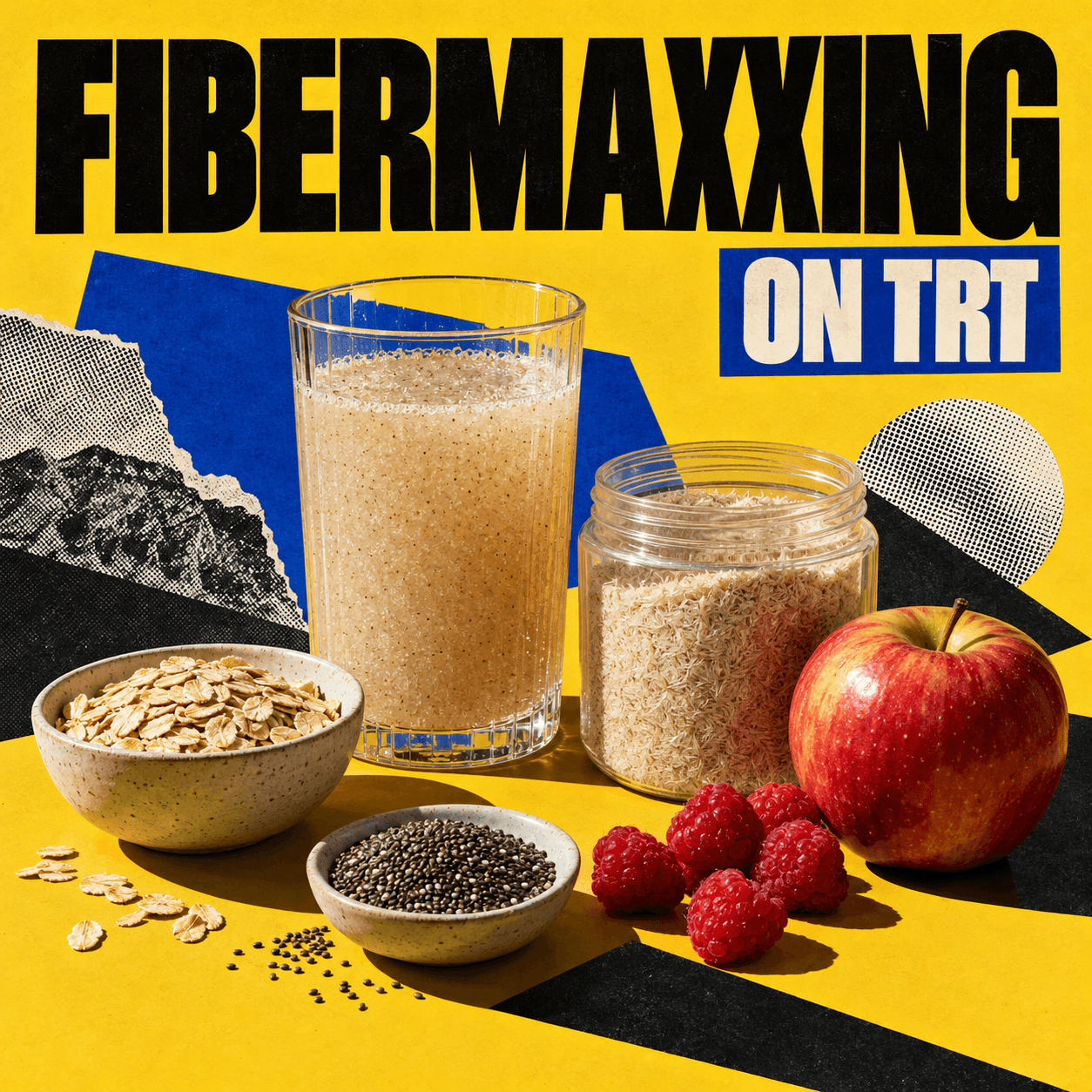
Fibermaxxing means deliberately eating more fiber, often with help from psyllium, chia seeds, beans, oats, berries, and high-fiber packaged foods. For men using TRT, the appeal is obvious: one inexpensive addition that might improve digestion, appetite control, metabolic health, and cholesterol.
The realistic answer is narrower. Psyllium can improve bowel regularity and may modestly lower LDL cholesterol, non-HDL cholesterol, and apolipoprotein B in some adults. It has not been shown to raise testosterone, correct TRT dosing, prevent a rise in hematocrit, or cancel out a poor diet. Fiber is a useful health tool, not a hormone hack.
Does fibermaxxing belong in a TRT routine?
Sometimes. Increasing fiber may make sense when a man eats little plant food, struggles with constipation, or is working on LDL-related cardiovascular risk with a licensed clinician. It is not a required companion to testosterone therapy, and psyllium is not automatically the right product for every patient.
The strongest case for fiber comes from ordinary health goals that still matter on TRT:
- Improving bowel regularity
- Replacing highly processed food with more filling whole foods
- Supporting LDL and non-HDL cholesterol management
- Adding structure to a nutrition plan during fat loss
Those benefits do not depend on TRT. Testosterone therapy also does not make a person immune to poor diet quality, rising cholesterol, constipation, or medication interactions.
What is psyllium, and why is it different from other fiber?
Psyllium is a viscous soluble fiber made from the husks of Plantago ovata seeds. When mixed with liquid, it forms a gel. That gel can add bulk and water to stool, which helps explain its use as a bulk-forming laxative. It can also reduce the absorption and reabsorption of some cholesterol-containing bile acids in the digestive tract.
Different fibers behave differently. Wheat bran is mainly insoluble fiber. Oats, barley, beans, and psyllium contain useful amounts of soluble fiber. Fermentable fibers can feed gut bacteria but may produce more gas. A product labeled "fiber" is therefore not interchangeable with every other fiber product.
What does psyllium do to LDL cholesterol?
Psyllium appears to lower LDL cholesterol by a modest average amount. A 2025 systematic review and dose-response meta-analysis of 41 randomized trials involving 2,049 adults found average reductions of about 8.6 mg/dL in LDL cholesterol and 9.1 mg/dL in total cholesterol. Changes in triglycerides and HDL cholesterol were not statistically significant.
The trials varied substantially in population, dose, and duration. The average result does not predict what will happen to one person, and psyllium is not a substitute for prescribed lipid-lowering treatment when that treatment is clinically indicated.
An earlier meta-analysis of 28 randomized trials also found reductions in LDL, non-HDL cholesterol, and apolipoprotein B with psyllium. That matters because ApoB reflects the number of cholesterol-carrying particles that can enter artery walls. The effect was still modest, which is exactly how psyllium should be framed: potentially useful, rarely dramatic.
What psyllium will not fix on TRT
Psyllium has no established role in increasing testosterone or making a TRT protocol more effective. It also should not be sold as a way to prevent or correct every laboratory change associated with treatment.
Psyllium has not been shown to:
- Raise total or free testosterone in men on TRT
- Correct an inappropriate testosterone dose or schedule
- Prevent or treat elevated hematocrit
- Replace blood-pressure management
- Reliably raise HDL cholesterol
- Offset smoking, heavy alcohol use, poor sleep, or a diet high in saturated fat
If cholesterol changes after treatment begins, the useful response is a review of the complete lipid pattern, diet, activity, medications, family history, and overall cardiovascular risk. AlphaMD's article on raising HDL while using testosterone explains why chasing HDL alone can be misleading.
Food first or psyllium supplement?
Whole foods should carry most of the load. Beans, lentils, oats, barley, vegetables, fruit, nuts, and seeds provide fiber along with protein, vitamins, minerals, and other compounds that a scoop of husk does not supply. The current Dietary Guidelines for Americans emphasize whole, nutrient-dense foods and limiting highly processed foods.
Psyllium becomes practical when food intake remains short of the target, constipation is an issue, or a clinician recommends soluble fiber as part of a cholesterol plan. It is an add-on to a sound diet, not a replacement for one.
Check the ingredient list before buying. Flavored powders may contain added sugar, sodium, sweeteners, or several different fibers. Capsules can require many units to match the amount of fiber in a serving of powder. The front label rarely tells the whole story.
How to add fiber without regretting it
The fastest way to make fibermaxxing miserable is to increase intake overnight. Bloating, gas, cramping, diarrhea, and constipation are common when the change is too abrupt.
A more sensible approach is to:
- Estimate how much fiber you already eat from food.
- Increase food sources gradually rather than changing every meal at once.
- If using psyllium, follow the product label and mix it with the stated amount of liquid.
- Keep fluid intake appropriate for your health needs.
- Review medications and supplements with a pharmacist or licensed clinician.
- Judge the result over time instead of reacting to one day of bloating or one bowel movement.
The National Institute of Diabetes and Digestive and Kidney Diseases advises adding fiber gradually and drinking enough liquid. More fiber without adequate fluid can make constipation worse.
Psyllium can interfere with medications
Psyllium can change how some oral medicines are absorbed. The correct spacing depends on the medication, the product, and the patient's medical history. A generic rule from social media is not safe enough.
MedlinePlus advises patients to tell their clinician and pharmacist about all medicines and supplements before using psyllium. The page lists specific medicines that require separation and notes additional precautions for people with swallowing difficulty, intestinal blockage, diabetes, heart disease, high blood pressure, or kidney disease.
That review matters for men on TRT because many also take medications for blood pressure, cholesterol, glucose, sexual health, or other chronic conditions. Do not assume a supplement is interaction-free because it is sold over the counter.
The water warning is serious
Psyllium swells when it contacts liquid. Taking it without enough fluid can cause choking or obstruction. The FDA's OTC laxative monograph requires a choking warning for bulk-forming products and tells users to take each dose with a full glass of liquid.
People with difficulty swallowing, unexplained abdominal symptoms, rectal bleeding, or a known intestinal narrowing should get medical advice before using a bulk-forming fiber product. Difficulty breathing or swallowing after a dose requires urgent evaluation.
How do you know whether it is working?
Choose the outcome before adding the supplement. If the goal is regularity, track stool frequency, consistency, discomfort, and whether the improvement persists. If the goal is cholesterol, repeat the clinician-selected lipid markers after enough time has passed to measure a stable change.
Do not use a temporary change on the scale as proof of fat loss. Fiber changes the amount of food and water moving through the digestive tract. That can move body weight without changing body fat.
The same principle applies to a TRT supplement stack. Add one meaningful variable at a time. Otherwise, a better lab result or a new symptom becomes impossible to attribute.
Common questions about fibermaxxing on TRT
Does psyllium increase testosterone?
No convincing human evidence shows that psyllium raises testosterone. Men using TRT should view it as a digestive and metabolic-health tool, not a testosterone booster.
Can psyllium lower LDL cholesterol?
Yes, conditionally. Randomized-trial meta-analyses show modest average reductions in LDL cholesterol. Individual response varies, and psyllium does not replace medical treatment when medication is indicated.
Will psyllium raise HDL?
Probably not by a meaningful amount. The 2025 meta-analysis found no statistically significant increase in HDL cholesterol.
Should every man on TRT take a fiber supplement?
No. Many people can meet their needs through food, and some have medical conditions or medication schedules that make psyllium a poor fit. A clinician or dietitian can help identify the reason for adding it.
Is more fiber always better?
No. Rapid or excessive intake can cause significant gastrointestinal symptoms. The useful amount depends on total diet, tolerance, health conditions, and the specific fiber.
Bottom line
Fibermaxxing is one of the more defensible nutrition trends, provided "maxxing" does not mean forcing down as much fiber as possible. Psyllium may modestly improve LDL-related markers and bowel regularity. It will not optimize testosterone, repair an unsuitable TRT protocol, or erase other cardiovascular risks.
Start with whole foods, increase fiber gradually, use enough fluid, and check medication timing with a pharmacist or licensed clinician. If the goal is better laboratory results, measure the relevant markers rather than trusting the marketing on the tub.
Have a question? Ask us.
At AlphaMD, we're here to help. Feel free to ask us any question you would like about TRT, medical weightloss, ED, or other topics related to men's health. Or take a moment to browse through our past questions.
People are asking...
What you are doing is awesome guys! I would highly appreciate your input on my case. I have been working out in the gym/calisthenics/swimming/jogging...
To answer your questions in order: Varicocele is one of the only truly reversible causes of hypogonadism. It is a fairly minor procedure, so if you can get it taken care of now, there is a possibility... See Full Answer
I am 42 and have been unable to lose weight or build muscle for years now even working with trainers and nutritionists. Semagultide makes me horribly ...
Providers on the AlphaMD platform have treated men at 700 before. Relative hypogonadism is far more rare than normal than traditional low Testosterone, but if you're suffering then you still deserve c... See Full Answer
I'm trying to settle an internal debate that I've got going about whether TRT would truly help to solve my issues or if it would cause more headaches ...
While starting TRT would certainly increase your IGF-1, which would increase muscle mass over time, starting TRT is not always the answer. To be honest, it’s not clear that TRT would be the fix for yo... See Full Answer
Get $30 off your first month’s order
Enter your email address now to receive $30 off your first month’s cost, other discounts, and additional information about TRT.
Legal Disclaimer
This website is a repository of publicly available information and is not intended to form a physician-patient relationship with any individual. The content of this website is for informational purposes only. The information presented on this website is not intended to take the place of your personal physician's advice and is not intended to diagnose, treat, cure, or prevent any disease. Discuss this information with your own physician or healthcare provider to determine what is right for you. All information is intended for your general knowledge only and is not a substitute for medical advice or treatment for specific medical conditions. The information contained herein is presented in summary form only and intended to provide broad consumer understanding and knowledge. The information should not be considered complete and should not be used in place of a visit, phone or telemedicine call, consultation or advice of your physician or other healthcare provider. Only a qualified physician in your state can determine if you qualify for and should undertake treatment.