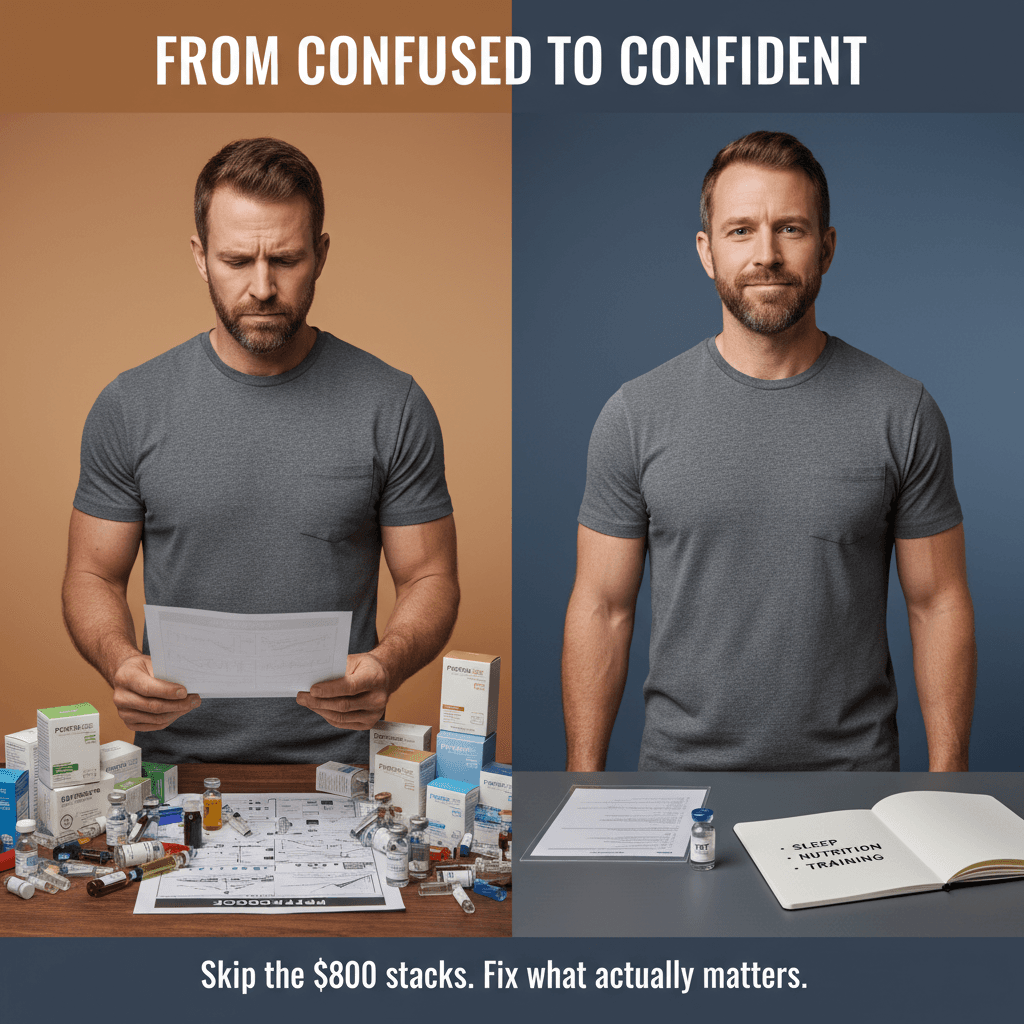
Methylene blue is a real medicine with a narrow job. In the US, every FDA-approved version is an injection given into a vein, in a medical setting, to treat a blood problem called acquired methemoglobinemia. The drops, capsules, and troches sold online as brain boosters and anti-aging aids are not approved for any of that. The human evidence behind those claims is thin, and the approved drug's label carries a boxed warning about a potentially fatal reaction with many common antidepressants.
If you're on testosterone replacement therapy (TRT) and you like to stack, methylene blue has probably popped up in your feed right next to NAD+ and creatine. Here's what it is, what the research actually shows, and who really shouldn't be experimenting with it.
What is methylene blue approved for?
Short answer: one thing, and only as an IV drug.
Methylene blue started out as a synthetic textile dye, created in 1876, and later found a place in medicine. Today, FDA's Drugs@FDA database lists ProvayBlue and several generic methylene blue products, and every one of them is an intravenous solution. The label indication is the treatment of acquired methemoglobinemia in children and adults. That's a condition where too much of your hemoglobin is in a form that can't carry oxygen properly.
Hospitals also use methylene blue off-label for a few other serious situations and as a dye during some procedures. All of those uses happen with a clinician watching. None of them involve a dropper bottle on your kitchen counter.
Why is it showing up in biohacking stacks?
The pitch is mostly about mitochondria, the parts of your cells that make energy. Methylene blue can shuttle electrons in lab settings, so sellers and influencers frame it as a cellular "energy upgrade" for focus, mood, and aging.
The trouble is the gap between a lab mechanism and a result in a living person. A mechanism tells you something might happen. It doesn't tell you that it does, at what amount, or whether it's safe to take every day.
There's also a quality problem. Australia's drug regulator issued a 2025 safety advisory about imported oral methylene blue products promoted for cognitive enhancement, mood, and anti-aging, noting they hadn't been assessed for quality, safety, or efficacy and that online products may be fake or contain undisclosed ingredients. Methylene blue is also still sold online as an aquarium treatment or dye, so it's easy to buy a version that was never made for people.
What does the human evidence actually show?
Not much, and it doesn't all point the same way.
Most of the encouraging data come from cell and animal studies. In people, the research is a small set of short studies, often a single dose given to healthy volunteers inside a brain scanner. One of the more interesting results cut against the hype: in a 2023 study, researchers expected methylene blue to boost brain blood flow and energy use, and instead it reduced both in humans and in rats.
Experts interviewed for an October 2026 PolitiFact explainer put it plainly: lasting cognitive benefits remain unproven, and claims about slowing aging or preventing disease go beyond the clinical evidence. The FDA hasn't approved methylene blue for focus, memory, energy, mood, or longevity.
What about testosterone? We searched for human studies showing methylene blue raises testosterone and didn't find any. If you've seen "methylene blue for T" content, it isn't built on human data.
Why is methylene blue risky with antidepressants?
This is the part that matters most, and it isn't hype.
The FDA-approved label carries a boxed warning, the agency's most serious kind, saying methylene blue may cause serious or fatal serotonin syndrome when combined with serotonergic drugs and opioids. The label tells clinicians to avoid combining it with:
- SSRIs and SNRIs, two common types of antidepressants
- MAOIs
- Other serotonergic medications the label names, including bupropion, buspirone, clomipramine, mirtazapine, and linezolid
- Opioids and dextromethorphan (a common cough suppressant)
The label says the mechanism isn't fully understood, but it cites reports suggesting methylene blue is a potent reversible inhibitor of monoamine oxidase, an enzyme that helps clear serotonin. Stack it on top of a medication that already raises serotonin and levels can climb too high. Serotonin syndrome can show up as agitation or confusion, a racing heart, sweating, high body temperature, tremor, muscle stiffness or twitching, nausea or diarrhea, and in severe cases seizures or coma.
The boxed warning is written for the IV drug, but Australia's regulator flags the same serotonin syndrome risk for oral methylene blue products bought online.
If you take any antidepressant, anxiety medication, or opioid and you're thinking about methylene blue, talk to the clinician who prescribes it first. And don't stop or change a psychiatric medication on your own to make room for a supplement.
Who else should avoid methylene blue?
- People with G6PD deficiency. The approved drug is contraindicated in G6PD deficiency because it can trigger hemolytic anemia, where red blood cells break down faster than your body replaces them. G6PD deficiency affects an estimated 400 million people worldwide, and many never have symptoms or know they have it. A lab test can check, and a licensed clinician can order it.
- People who are pregnant or could become pregnant. The label says methylene blue may cause fetal harm, and Australia's regulator says it shouldn't be used during pregnancy.
- Anyone with a past serious allergic reaction to methylene blue or a related thiazine dye.
The label also notes methylene blue can cause confusion, dizziness, and vision changes, and can throw off pulse oximeter readings. If you've taken it and end up in an emergency room or surgery, tell the care team.
How does this fit with TRT?
There's no established reason to add methylene blue to TRT, and no study we found tested the two together. The overlap that matters is a practical one: plenty of men on TRT also take an SSRI, an SNRI, bupropion, or another serotonergic medication, and that's exactly the group the boxed warning is about.
If energy, focus, or mood still feel off on treatment, that's worth raising with the clinician overseeing your care. They can look at your labs, sleep, medications, and mental health together. AlphaMD has more on why TRT alone may not fix low mood and on how NAD+ fits alongside TRT.
Frequently asked questions
Are the methylene blue products sold online approved?
No. Methylene blue is widely marketed online as a supplement or sold as a lab or aquarium product. Being for sale doesn't mean a product has been approved or quality-tested for human use. In the US, the only FDA-approved methylene blue products are IV injections.
Does blue urine mean it's working?
No. Methylene blue is a dye, and much of it leaves the body in urine, so blue discoloration of urine and other body fluids is an expected effect. It says nothing about benefit.
Can I take methylene blue if I stopped my antidepressant recently?
Ask the clinician who prescribed it. Some serotonergic medications stay in your system for a while after the last dose, and the timing question is one for a licensed clinician who knows your full medication history.
Is methylene blue the same as "blue light" or red light therapy?
No. Methylene blue is a chemical you swallow or receive by injection. Light therapies are devices. They're sometimes marketed together, but they're unrelated.
The bottom line
Methylene blue is a legitimate hospital drug with one FDA-approved use, delivered by IV. As a wellness stack add-on, the benefits haven't been shown in people, product quality is a gamble, and the interaction risk with antidepressants and opioids is serious enough to earn a boxed warning. If you're curious, start with a conversation with a licensed clinician who can see your whole medication list.
Sources
- ProvayBlue (methylene blue) injection prescribing information, DailyMed
- Drugs@FDA: ProvayBlue (NDA 204630) product overview
- PolitiFact: Methylene blue: What to know about this textile dye being used as a wellness supplement (Oct 30, 2026)
- Therapeutic Goods Administration (Australia): Imported unregistered methylene blue products safety advisory (2025)
- Singh et al., Journal of Cerebral Blood Flow & Metabolism (2023): acute methylene blue and brain blood flow in humans and rats
- MedlinePlus Genetics: Glucose-6-phosphate dehydrogenase deficiency
This article is educational and is not medical advice. Decisions about medications and supplements should be made with an appropriately licensed clinician.