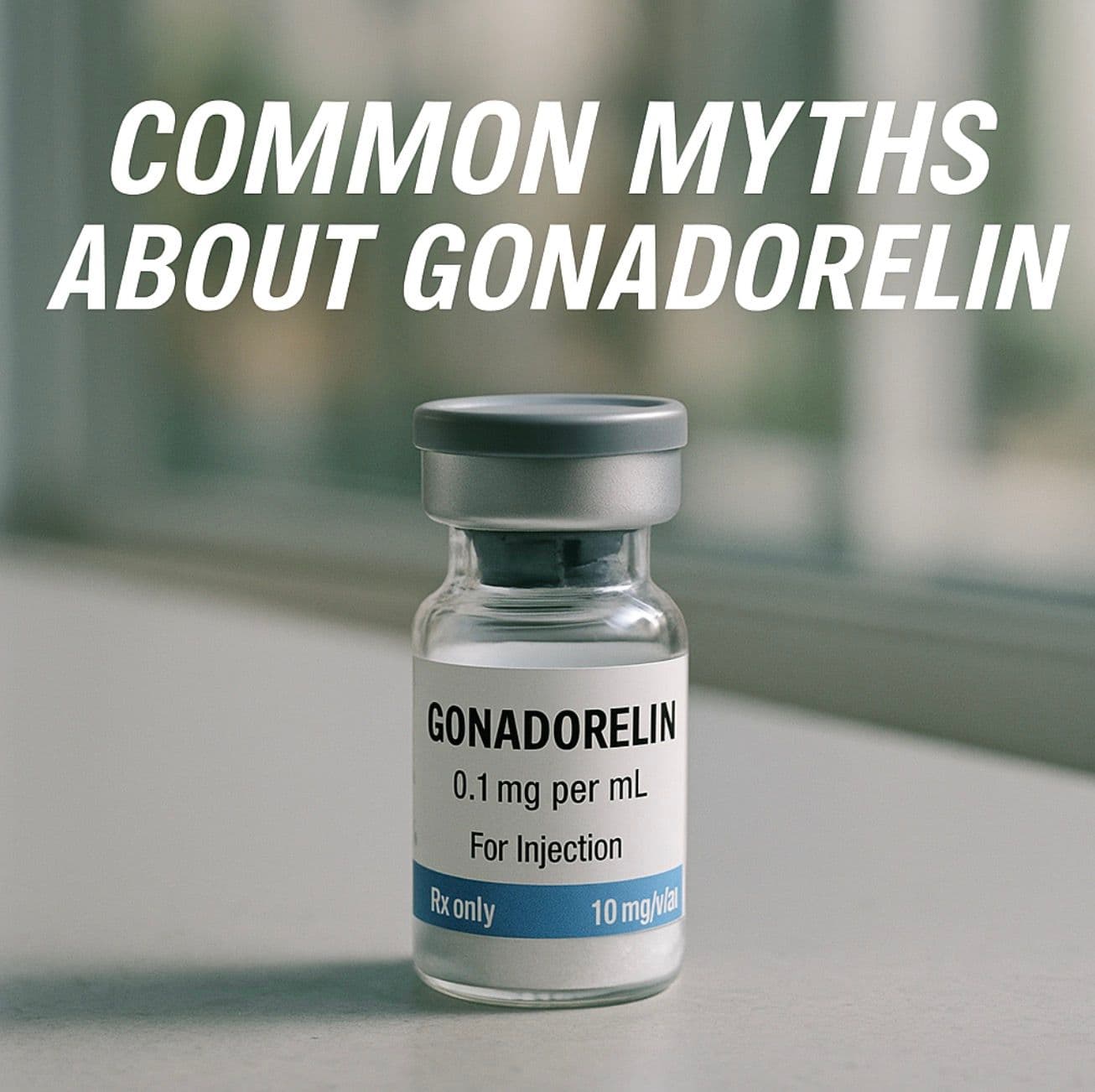
If you’ve been researching testosterone replacement therapy (TRT) or fertility treatments, chances are you’ve come across gonadorelin. Unfortunately, misinformation spreads quickly online, and many men are left confused about what it does, how it works, and whether it’s safe.
To clear things up, we’re breaking down the most common myths about gonadorelin — and revealing the truth behind them.
Myth #1: Gonadorelin is the same as hCG
The Truth: While gonadorelin and hCG are sometimes mentioned in the same conversations, they are not the same thing.
- Gonadorelin: Signals the pituitary gland to release luteinizing hormone (LH) and follicle-stimulating hormone (FSH).
- hCG: Mimics LH directly, bypassing the pituitary.
Both can support testosterone and fertility, but they act through different mechanisms.
Myth #2: Gonadorelin is only used for fertility treatments
The Truth: Gonadorelin does play a role in fertility protocols, but that’s not its only use. Many physicians incorporate gonadorelin into TRT programs to help preserve testicular function and maintain natural hormone production.
It’s more versatile than most people realize.
Myth #3: Gonadorelin shuts down your natural testosterone
The Truth: Actually, it does the opposite. Exogenous testosterone can suppress your body’s natural hormone production, but gonadorelin works by stimulating the HPG axis — encouraging your body to produce its own testosterone.
That’s why it’s sometimes paired with TRT to keep the testes active.
Myth #4: Gonadorelin has no side effects
The Truth: While it’s generally well tolerated, no therapy is completely without risk. Some men report mild side effects such as:
- Headaches
- Flushing
- Irritation at the injection site
These are usually temporary, but patients should always discuss risks and benefits with their provider.
Myth #5: Gonadorelin is a “new” or “experimental” drug
The Truth: Gonadorelin has been studied for decades and has a long track record of use in endocrinology. It’s often overshadowed by medications like hCG or Clomid, but it remains a clinically validated therapy with well-documented effects.
Conclusion
Gonadorelin isn’t new, untested, or mysterious — but it is widely misunderstood. By separating myths from facts, men can make informed choices about whether gonadorelin belongs in their TRT or fertility plan.
👉 If you’re considering gonadorelin, talk to a licensed provider who understands hormone health and can design a protocol tailored to your needs.
FAQs About Gonadorelin
Q: How long does gonadorelin take to work?
A: Many men notice effects within weeks, but timelines can vary based on dosage, goals, and whether it’s paired with TRT.
Q: Is gonadorelin safer than hCG?
A: Both have good safety profiles, but they work differently. Which one is “better” depends on your treatment goals and medical history.
Q: Can women use gonadorelin?
A: Yes, gonadorelin is also used in certain female fertility treatments, though protocols differ from those used in men.
Q: Do you need a prescription for gonadorelin?
A: Yes. Gonadorelin is a prescription medication that should only be used under medical supervision.