An intramuscular (IM) injection delivers prescribed medication into muscle tissue. The safest process is to confirm the medication, dose, needle, injection site, and schedule with your clinician; prepare a clean workspace; wash your hands; clean the vial stopper and skin; inject at the instructed angle; and place the used needle and syringe directly into a sharps container.
This guide is educational and does not replace the personalized instructions from your licensed clinician or pharmacist. If your prescription instructions differ from this page, follow your care team.
What is an intramuscular injection?
An intramuscular injection places medication into muscle, where it can be absorbed into the bloodstream. Some forms of testosterone replacement therapy (TRT) are prescribed this way. Your clinician determines whether IM injection is appropriate and selects the medication, dose, schedule, site, and equipment for you.
Before you start: confirm your prescription and supplies
Before every injection, confirm that you understand your prescription and have the supplies specified by your clinician or pharmacy:
- The correct medication and prescribed dose
- A new sterile syringe and new sterile needle or needles specified for your prescription
- Alcohol prep pads
- Clean gauze and an adhesive bandage, if needed
- An FDA-cleared sharps disposal container
Check the medication label, expiration date, and appearance. Do not use medication that is expired, damaged, contaminated, or looks different from what your pharmacy told you to expect. Do not warm a vial in hot water unless your pharmacist or prescriber specifically instructs you to do so.
How to prepare an intramuscular injection
- Wash your hands thoroughly with soap and water, dry them, and work on a clean, well-lit surface.
- Gather all supplies before opening sterile packaging. Keep needle tips, syringe tips, and vial stoppers from touching unclean surfaces.
- Confirm the medication name and prescribed dose. Clean the vial stopper with a fresh alcohol pad and allow it to air-dry.
- Attach and use the drawing equipment exactly as instructed by your clinician or pharmacist. Draw only the prescribed amount of medication.
- Remove large air bubbles and recheck the dose marking. If the dose is unclear or you are unsure whether the syringe is prepared correctly, stop and contact your care team.
- Choose only an injection site approved for you. Clean the skin with a new alcohol pad and let it air-dry completely.
Do not switch injection routes on your own. If you are comparing muscle and under-the-skin injections, review intramuscular versus subcutaneous testosterone injections and discuss the choice with your clinician.
How to give an intramuscular injection
- Position yourself so the approved muscle is relaxed and you can keep the syringe steady.
- Remove the needle cap without touching the needle. Use the skin-positioning technique your clinician demonstrated.
- Insert the needle into the approved site at a 90-degree angle unless your clinician gave you different instructions.
- Keep the syringe stable and depress the plunger at a steady, controlled pace. Follow any medication-specific instructions from your care team.
- Withdraw the needle along the same path. Apply gentle pressure with clean gauze; add a bandage if needed.
For an independent overview of site selection and technique, see the MedlinePlus guide to giving an intramuscular injection. Your personal prescription instructions still come first.
After the injection
- Immediately place the used needle and syringe in a sharps container. Do not recap, bend, break, or reuse a needle.
- Wash your hands and record the date, time, dose, and injection site if your care plan asks you to track them.
- Rotate among the injection sites approved by your clinician rather than repeatedly using the same spot.
- Store the medication exactly as the label and dispensing pharmacy direct.
Follow the FDA’s guidance for proper sharps disposal and your local disposal rules. Keep sharps containers away from children and pets.
What is normal after an IM injection?
Brief tenderness, a small spot of blood, or mild soreness can occur. Apply gentle pressure and avoid rubbing the site aggressively. Contact your clinician if pain, redness, warmth, swelling, a firm lump, drainage, bruising, numbness, or weakness is severe, keeps worsening, or does not improve.
Seek urgent medical care for rapidly spreading redness, severe pain, significant swelling, fever, or other signs of infection. Call emergency services for trouble breathing, facial or mouth swelling, fainting, or other signs of a serious allergic reaction.
Common intramuscular injection mistakes to avoid
- Changing the dose, route, needle, or schedule without your clinician
- Touching sterile connection points or injecting before cleaned skin has dried
- Guessing at an injection site or needle depth
- Injecting through irritated, infected, bruised, scarred, or injured skin
- Reusing or recapping needles
- Taking an extra dose after leakage or a missed dose without clinical guidance
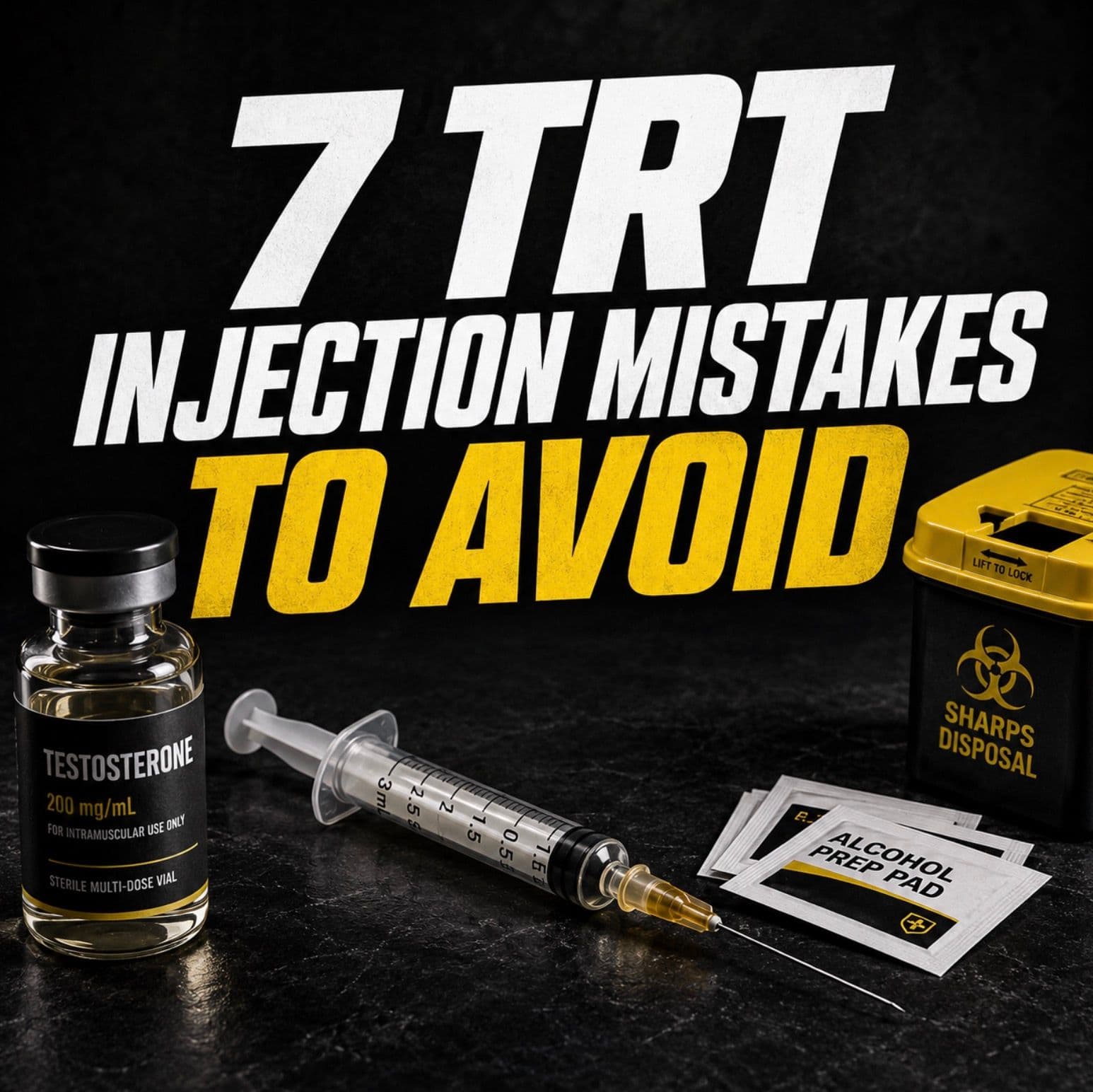
For more practical troubleshooting, review 7 TRT injection mistakes that are easy to avoid. If timing is the concern, see timing your injections for optimal TRT results.
Frequently asked questions
At what angle is an intramuscular injection given?
IM injections are generally given at a 90-degree angle, but your clinician’s site- and medication-specific instructions take priority.
How deep should an IM injection go?
There is no single safe depth or needle length for everyone. The correct equipment depends on the injection site, body composition, medication, and prescribed route. Use only the needle specified by your clinician or pharmacist.
Can I reuse a needle or syringe?
No. Use a new sterile needle and syringe for every injection and discard them immediately after use.
Should I recap the needle after the injection?
No. Put the used needle and syringe directly into a sharps container. Recapping increases the risk of an accidental needlestick.
What should I do if medication leaks or the dose may be incomplete?
Apply gentle pressure with clean gauze. Do not automatically repeat the dose; contact your clinician or pharmacist for medication-specific advice.
Get help before your first injection
Review the video on this page and the complete instructions from your clinician before your first dose. If any step, dose marking, injection site, or piece of equipment is unclear, pause and contact your AlphaMD care team. A live demonstration can help you practice the process safely and confidently.