
Is TRT Making You Lazy? Why Motivation Can Drop After Starting Therapy
Published on:
People are asking...
Does TRT benefit erection quality?...
Yes, generally the three main reasons people start TRT are: Energy/motivation, fat loss issues/muscle loss, and libido/erectile function.... See Full Answer
No libido increase after starting TRT, probably even slight drop due to balls shrinking and no longer needing regular emptying. Of course I'm going to...
Most instances of low libido are not hormonal. Most low libido is emotional/paychological, stress induced, due to sleep apnea, or relationship Issues. If TRT never improved your libido at all, then th... See Full Answer
What are the most common side effects and symptoms you see in patients, that may eventually lead them to stop?...
The primary reasons men stop TRT, which providers on the platform rarely see (less than 5%), are desire to maximize chances of fertility, weight gain (TRT increases hunger because of anabolism), and w... See Full Answer
Have a question? Ask us.
At AlphaMD, we're here to help. Feel free to ask us any question you would like about TRT, medical weightloss, ED, or other topics related to men's health. Or take a moment to browse through our past questions.
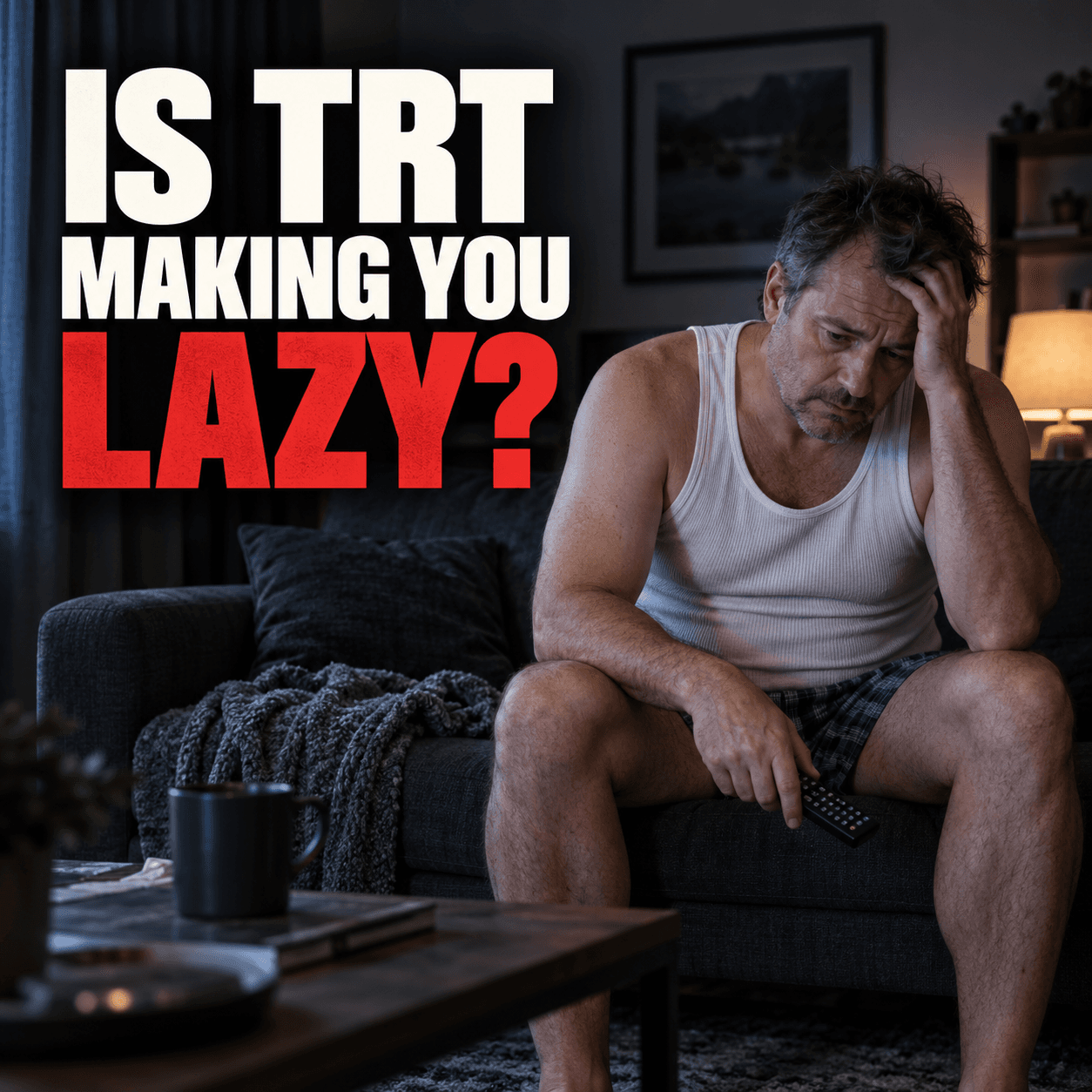
TRT is not known to cause laziness. If your motivation, energy, or mental drive drops after starting testosterone, the change deserves a clinical review. It should not be written off as a personality flaw, and it should not automatically be blamed on one hormone.
Controlled trials do not support the idea that testosterone reliably turns motivation on or off. In the Testosterone Trials, treatment produced small improvements in some mood measures but did not significantly improve the primary measure of vitality. A later TRAVERSE analysis found modest improvements in mood and energy, with no improvement in cognition or sleep quality. The evidence suggests that testosterone can help some symptoms in appropriately diagnosed men, but it is not a stimulant and does not manufacture ambition.
"Lazy" is too vague to guide treatment
Men often use the word lazy to describe several different problems:
- Physical fatigue or poor exercise tolerance
- Daytime sleepiness
- Low mood, apathy, or loss of interest
- Brain fog or poor concentration
- Reduced recovery from work or training
- Disappointment that TRT did not create an immediate transformation
Those problems have different causes. A useful evaluation starts by naming the symptom, when it began, and whether it follows a pattern related to sleep, dosing, work stress, alcohol, meals, or training.
The 2026 Endocrine Society statement on testosterone therapy makes the same broader point: low energy, libido, and mood have many possible causes. Symptoms alone do not identify a testosterone problem.
What can make a man feel flat after starting TRT?
The testosterone exposure may not match the treatment goal
An on-treatment testosterone result can be hard to interpret without knowing the formulation, dose schedule, time since the last dose, and when therapy reached a steady state. A result drawn at an inconsistent point in the dosing cycle can look very different from a result taken at the intended monitoring time.
The Endocrine Society monitoring guideline recommends using formulation-specific timing and evaluating both treatment response and adverse effects. A licensed clinician may adjust dose, frequency, formulation, or testing time based on that full context. Changing the protocol after one bad day or one isolated result makes the pattern harder to interpret.
Sleep may be the real bottleneck
Short sleep, irregular sleep, obstructive sleep apnea, alcohol, and late-night stimulation can all reduce daytime alertness. TRT does not cancel those effects. Testosterone products can also worsen sleep apnea in susceptible patients, which is one reason sleep symptoms belong in follow-up care.
Loud snoring, witnessed breathing pauses, morning headaches, and persistent daytime sleepiness warrant discussion with a licensed clinician. A testosterone dose increase is not a substitute for evaluating a sleep disorder.
Hematocrit or blood pressure may have changed
Testosterone can increase red blood cell production. It can also increase blood pressure. The FDA's 2025 class-wide testosterone labeling update added or strengthened blood pressure warnings across testosterone products.
Neither change can be diagnosed by how a man feels. A complete blood count, hematocrit, and reliable blood pressure readings give the clinician objective information. Headaches, flushing, reduced exercise tolerance, or new blood pressure elevation deserve prompt review rather than self-treatment.
Another condition may be contributing
Fatigue and low motivation can come from depression, anxiety, thyroid disease, anemia, iron problems, diabetes, medication effects, acute illness, excessive training, inadequate calories, or heavy alcohol use. Testosterone does not protect a man from any of them.
This is also why estradiol should not become the default explanation for every symptom. Estradiol is physiologically important in men. A result should be interpreted with symptoms, timing, testosterone exposure, medications, and the clinical question. Routine attempts to drive estradiol as low as possible can create new problems.
The expectation may be larger than the likely effect
Some men expect TRT to produce relentless energy, confidence, and focus. Clinical trials show a more measured result. In the Testosterone Trials, sexual function improved more clearly than vitality, and mood changes were small.
TRT may improve symptoms caused by confirmed testosterone deficiency. It cannot choose goals, repair a chaotic schedule, or replace treatment for depression, sleep apnea, or cardiometabolic disease.
A better way to troubleshoot low motivation on TRT
Track a short, consistent set of variables for two weeks before drawing conclusions:
- Dose date and time
- Sleep duration and sleep quality
- Morning energy and afternoon energy
- Mood, interest, and concentration
- Libido and erectile function
- Training performance and recovery
- Alcohol intake
- Blood pressure, if your clinician has asked you to monitor it
Bring the pattern, medication list, supplements, and recent lab results to the clinician managing treatment. The goal is to determine whether symptoms track with the protocol or point elsewhere.
Depending on the history, a clinician may review total testosterone, free testosterone when indicated, sex hormone-binding globulin, complete blood count, hematocrit, and prostate monitoring. Thyroid, iron, glucose, or other testing may be appropriate when the symptoms suggest another cause. More testing is not always better. Each test should answer a defined question.
When to contact a clinician promptly
Do not wait for a routine follow-up if fatigue comes with chest pain, shortness of breath, fainting, one-sided leg swelling, a severe new headache, or marked mood changes. Seek urgent medical care when symptoms may represent an emergency.
Persistent depression, loss of interest, or thoughts of self-harm also require prompt professional help. Those symptoms should never be reduced to a testosterone number.
The bottom line
TRT is not known to make men lazy. A drop in energy or motivation after starting therapy is a signal to define the symptom and review the full clinical picture. The most useful next step is a structured check of treatment exposure, lab timing, sleep, blood pressure, hematocrit, other medical causes, medications, and expectations with a licensed clinician.
This article is for educational purposes and is not medical advice. Do not change or stop prescription treatment without guidance from the clinician managing your care.
Have a question? Ask us.
At AlphaMD, we're here to help. Feel free to ask us any question you would like about TRT, medical weightloss, ED, or other topics related to men's health. Or take a moment to browse through our past questions.
People are asking...
Does TRT benefit erection quality?...
Yes, generally the three main reasons people start TRT are: Energy/motivation, fat loss issues/muscle loss, and libido/erectile function.... See Full Answer
No libido increase after starting TRT, probably even slight drop due to balls shrinking and no longer needing regular emptying. Of course I'm going to...
Most instances of low libido are not hormonal. Most low libido is emotional/paychological, stress induced, due to sleep apnea, or relationship Issues. If TRT never improved your libido at all, then th... See Full Answer
What are the most common side effects and symptoms you see in patients, that may eventually lead them to stop?...
The primary reasons men stop TRT, which providers on the platform rarely see (less than 5%), are desire to maximize chances of fertility, weight gain (TRT increases hunger because of anabolism), and w... See Full Answer
Get $30 off your first month’s order
Enter your email address now to receive $30 off your first month’s cost, other discounts, and additional information about TRT.
Legal Disclaimer
This website is a repository of publicly available information and is not intended to form a physician-patient relationship with any individual. The content of this website is for informational purposes only. The information presented on this website is not intended to take the place of your personal physician's advice and is not intended to diagnose, treat, cure, or prevent any disease. Discuss this information with your own physician or healthcare provider to determine what is right for you. All information is intended for your general knowledge only and is not a substitute for medical advice or treatment for specific medical conditions. The information contained herein is presented in summary form only and intended to provide broad consumer understanding and knowledge. The information should not be considered complete and should not be used in place of a visit, phone or telemedicine call, consultation or advice of your physician or other healthcare provider. Only a qualified physician in your state can determine if you qualify for and should undertake treatment.