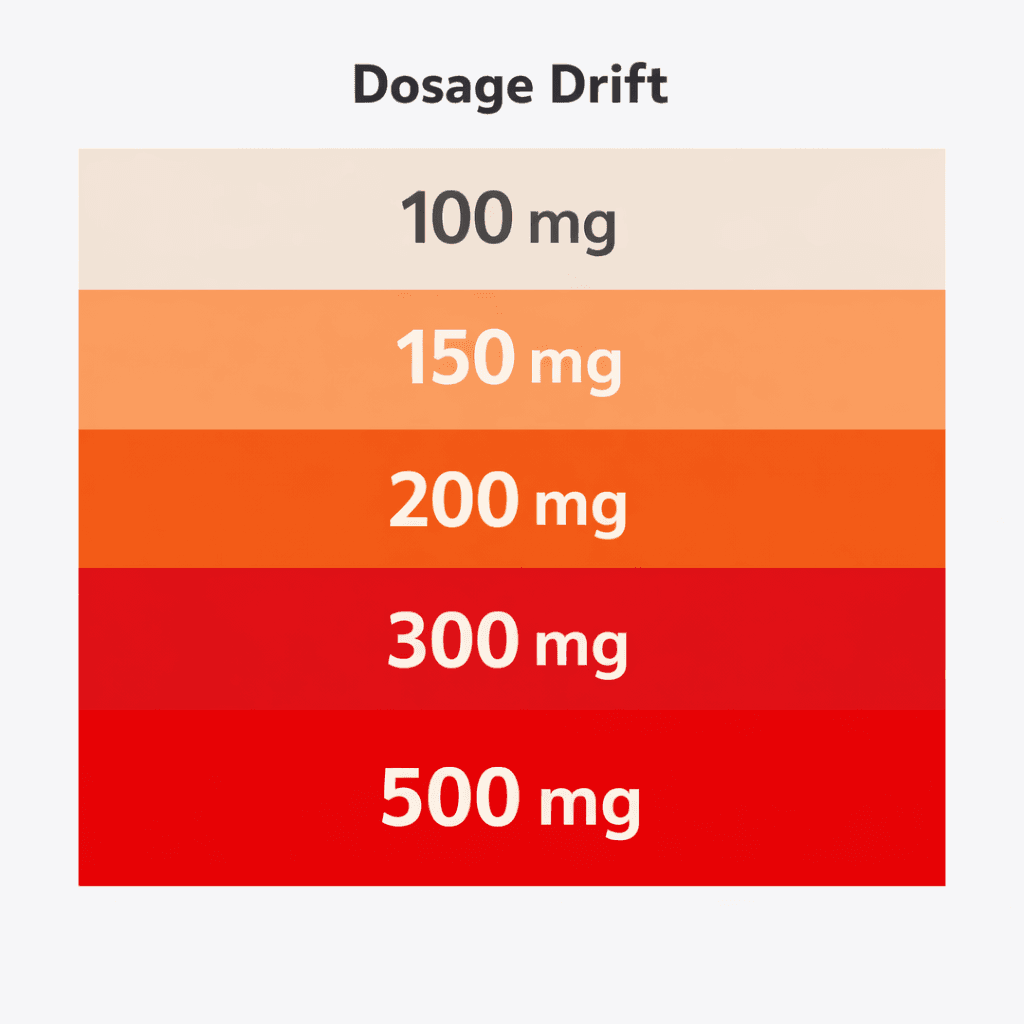
Microdosing testosterone usually means splitting the same weekly dose into smaller injections given every day or every other day, not taking less testosterone overall. The aim is steadier blood levels with smaller peaks and dips. The case for fewer side effects rests on drug-level studies and expert reviews, not on head-to-head trials of daily versus weekly dosing.
What is microdosing testosterone?
Microdosing testosterone means giving smaller doses more often than standard testosterone replacement therapy (TRT) schedules do. Labeled schedules use longer gaps: the DEPO-Testosterone label gives cypionate every two to four weeks (DEPO-Testosterone label), and the American Urological Association's dosing table lists cypionate and enanthate every 7 to 14 days (AUA Table 2, 2018). Microdosing shortens that to daily or every-other-day injections.
Gels are different. They are already applied once a day on their label (AndroGel 1.62% label), so "microdosing" mostly describes injections.
What are the possible benefits?
- Steadier hormone levels. Larger doses at longer intervals make levels rise and fall more. In a 1980 study of enanthate given from 100 mg weekly to 400 mg every 4 weeks, levels fluctuated on every schedule, and average levels between doses were highest on 100 mg weekly (Snyder and Lawrence, JCEM 1980). In a phase II study of 39 men, weekly subcutaneous enanthate gave levels with "low variation relative to 200-mg IM" (Kaminetsky et al., Sex Med 2015). Cypionate's half-life is about 8 days (DEPO-Testosterone label), so levels already fall gradually between weekly injections.
- Possibly fewer peak-related side effects. A 2026 practical review (expert opinion, not a trial) lists early acne or oily skin, breast tenderness, fluid retention, and mood or sleep changes among complaints that may come from peak-to-trough swings, and suggests more frequent, lower doses as one option, together with a dose adjustment (Cureus 2026). Whether more frequent injections lower hematocrit (the share of your blood made of red cells) has not been settled. Injectables raise hematocrit more than other forms (Jones et al., Sex Med Rev 2015). In one observational study of 234 men, a weekly subcutaneous autoinjector was linked to lower hematocrit and estradiol than weekly intramuscular cypionate at the same 100 mg dose (J Urol 2022), but that compared two products and routes, not two schedules. More on the risks is in this guide to how high hematocrit becomes dangerous.
- More even symptom relief. The same review describes men on longer intervals whose fatigue, low libido, or erectile symptoms return late in the cycle. For them, the review suggests the problem may be dose timing rather than too little testosterone in total (Cureus 2026).
- Finer dose changes. Small, frequent doses let a prescriber make smaller adjustments. The review advises that "dose redistribution should be considered before dose escalation" in many patients (Cureus 2026). The prescriber sets the dose and schedule.
How microdosing testosterone works
Microdosing uses the same testosterone esters as weekly TRT, given in smaller amounts.
- Injectable testosterone. Small doses of testosterone cypionate or enanthate are injected daily or every other day, into muscle or under the skin, often with a fine insulin syringe. The testosterone does not go straight into the bloodstream: esters in oil "are absorbed slowly from the lipid phase" at the injection site (DEPO-Testosterone label). The differences between routes are covered in intramuscular vs subcutaneous injections.
- Topical testosterone. Gels are applied to the skin once daily, which avoids needles. The gel label carries a boxed warning about secondary exposure: children should avoid contact with unwashed or unclothed application sites (AndroGel 1.62% label).
Considerations and potential risks
Microdosing uses the same drug on a different schedule, so the usual TRT risks and monitoring still apply:
- Medical supervision. The AUA guideline says to measure hemoglobin and hematocrit before starting testosterone (Strong Recommendation, Grade A) and to measure testosterone every 6 to 12 months on therapy (AUA guideline). The label adds periodic hemoglobin and hematocrit checks and warns that testosterone can increase blood pressure (DEPO-Testosterone label). Your prescriber needs to know your dose, schedule, and when your last injection was relative to each blood draw, or results can mislead (Cureus 2026).
- Consistency. Daily dosing means many more injections. With an 8-day half-life, one missed small dose changes levels little, so the bigger cost is the routine itself. If weekly dosing already gives stable symptoms and acceptable labs, extra injections "may add burden without clear benefit" (Cureus 2026).
- Individual response. Not everyone does better on microdosing. Weekly dosing is "often a reasonable and effective schedule, and many patients do well with it" (Cureus 2026).
- Supplies. More injections mean more syringes and needles, and more injection sites to rotate.
Who might consider microdosing testosterone?
Microdosing is worth discussing with your prescriber if you:
- Have side effects on weekly or every-two-week dosing that seem tied to peaks, such as acne or breast tenderness soon after an injection.
- Notice symptoms returning in the days before your next injection.
- Need smaller dose adjustments than a weekly schedule allows.
A schedule change does not change who should start TRT. "Exogenous testosterone therapy should not be prescribed to men who are currently trying to conceive" (AUA, Strong Recommendation, Grade A) (AUA guideline), whether the dose is given daily or weekly. For a fuller comparison of schedules, see daily vs weekly testosterone injections.
Bottom line
Microdosing testosterone splits a dose into smaller, more frequent injections to keep levels steadier. Drug-level studies support the steadier levels, and an expert review supports trying it for men with peak-related side effects or late-cycle symptoms. Lower side effects or hematocrit compared with weekly dosing have not been shown in a head-to-head trial. Your prescriber can decide whether a schedule change makes sense, alongside the same lab monitoring any TRT needs.