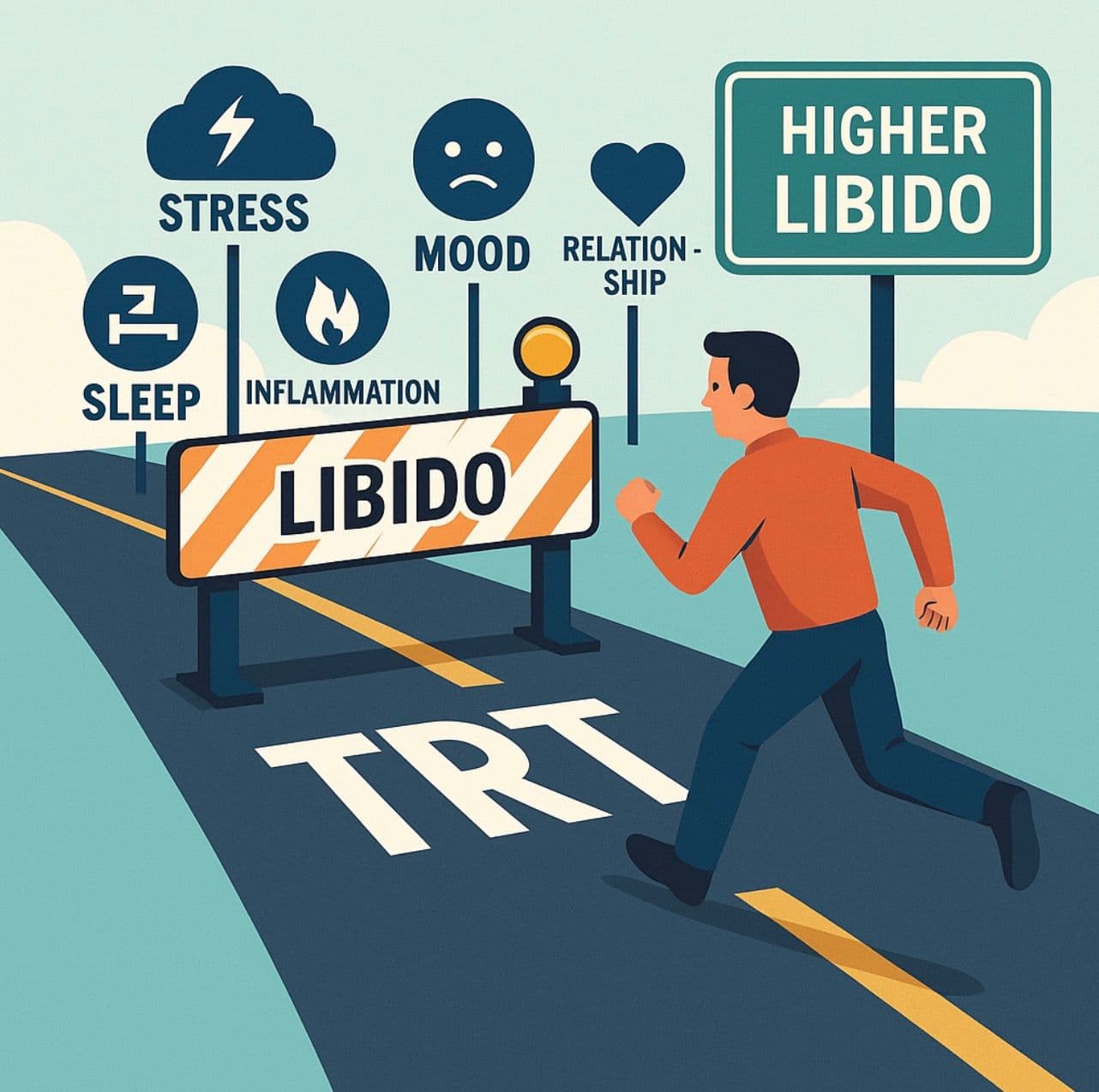
In men with confirmed low testosterone, testosterone replacement therapy (TRT) can improve orgasm and sexual satisfaction as well as sex drive. A 2017 meta-analysis of 14 placebo-controlled trials (2,298 men) found improvements in erectile function, libido, orgasm, intercourse satisfaction, and overall sexual satisfaction (Corona et al., Eur Urol 2017). The average effects were moderate, and they apply to men whose testosterone is actually low.
Many men think of low testosterone (low T) as just a "sex drive" issue. Low T can bring tiredness, less motivation, and less interest in sex, but trials that measured more than desire found changes in erections, orgasm, and satisfaction too.
How testosterone affects pleasure
Testosterone affects more than libido. The American Urological Association (AUA) guideline says patients should be told that testosterone therapy "may result in improvements in erectile function, low sex drive" and depressive symptoms, among other effects (Moderate Recommendation, Grade B) (AUA). In placebo-controlled trials of men with low T, treatment improved:
- Desire and sexual activity. In the Sexual Function Trial of the Testosterone Trials (470 men aged 65 or older with low libido and testosterone under 275 ng/dL), one year of testosterone gel improved 10 of 12 measures of sexual activity compared with placebo (Cunningham et al., JCEM 2016).
- Erections. Across the 2017 meta-analysis, erectile function improved by 2.31 points over placebo on the erectile function score of the International Index of Erectile Function (IIEF, a standard questionnaire). Men with more severe deficiency (total T under 8 nmol/L, about 230 ng/dL) improved more, and men with diabetes or obesity improved less (Corona et al., Eur Urol 2017).
- Orgasm and satisfaction. The same analysis found improvements on the IIEF scores for orgasm, intercourse satisfaction, and overall sexual satisfaction (Corona et al., Eur Urol 2017).
The Testosterone Trials called the benefit to sexual function "moderate" (Snyder et al., NEJM 2016). These were men aged 65 and older, followed for one year.
For erectile dysfunction, the 2017 meta-analysis suggests TRT alone may be reasonable for men with low T and milder erectile dysfunction, while adding a PDE5 inhibitor such as sildenafil (Viagra) may be more appropriate when erectile dysfunction is more severe (Corona et al., Eur Urol 2017).
What changes after starting TRT, and when
A review of published TRT studies found that sexual interest starts to change after about 3 weeks and plateaus at about 6 weeks. Changes in erections and ejaculation may take up to 6 months (Saad et al., Eur J Endocrinol 2011).
In the Testosterone Trials, men on testosterone also reported slightly better mood and fewer depressive symptoms than men on placebo. Energy (vitality) did not improve (Snyder et al., NEJM 2016).
For a fuller breakdown by week and month, see how long testosterone takes to work.
Why this matters for your relationship
Sexual satisfaction is emotional as well as physical. Intercourse satisfaction and overall sexual satisfaction both improved with treatment in the 2017 meta-analysis (Corona et al., Eur Urol 2017). None of these trials measured relationship quality directly.
What are the trade-offs?
TRT has risks to weigh against these benefits. The AUA guideline says testosterone "should not be prescribed to men who are currently trying to conceive" (Strong Recommendation, Grade A), and that clinicians should check hemoglobin and hematocrit (the share of your blood made of red cells) before starting, because testosterone raises the risk of polycythemia, or too many red cells (Strong Recommendation, Grade A) (AUA). In 2025 the FDA added a warning about increased blood pressure to testosterone products (FDA 2025).
Should you get your testosterone levels checked?
If you've noticed:
- Declining sex drive
- Weaker erections
- Less intense orgasms
- Fatigue or low mood
…it might be time to check your testosterone. Symptoms start the evaluation, and labs decide it. Under the AUA guideline, low testosterone is diagnosed when symptoms or signs come with total testosterone below 300 ng/dL on two separate early-morning tests (AUA). In men whose testosterone is not clearly low, the effect of testosterone on sexual function is uncertain (Corona et al., J Sex Med 2014).
If you're unsure where to begin, start with TRT 101: A Beginner's Guide, which covers symptoms, how testing works, and what to expect.
Bottom line
In men with confirmed low testosterone, TRT improves orgasm, erections, desire, and sexual satisfaction compared with placebo, though the average gains are moderate and desire changes sooner than erections. The evidence is weakest for men whose testosterone is not clearly low. If you want to know whether your levels qualify, AlphaMD's testosterone replacement therapy page explains how testing and treatment work.