Updated on September 16, 2025
Feeling off after starting TRT does not by itself show whether the dose is too low or too high. A structured review of symptoms, prescription details, laboratory timing, and safety markers is more useful than guessing.
Starting testosterone replacement therapy (TRT) is an exciting step toward reclaiming your energy, focus, and overall well-being. But what many men don’t realize is that TRT isn’t always “set it and forget it.” Your first dose is a starting point — not the finish line. Fine-tuning your TRT regimen is completely normal and often necessary to get you feeling your best.
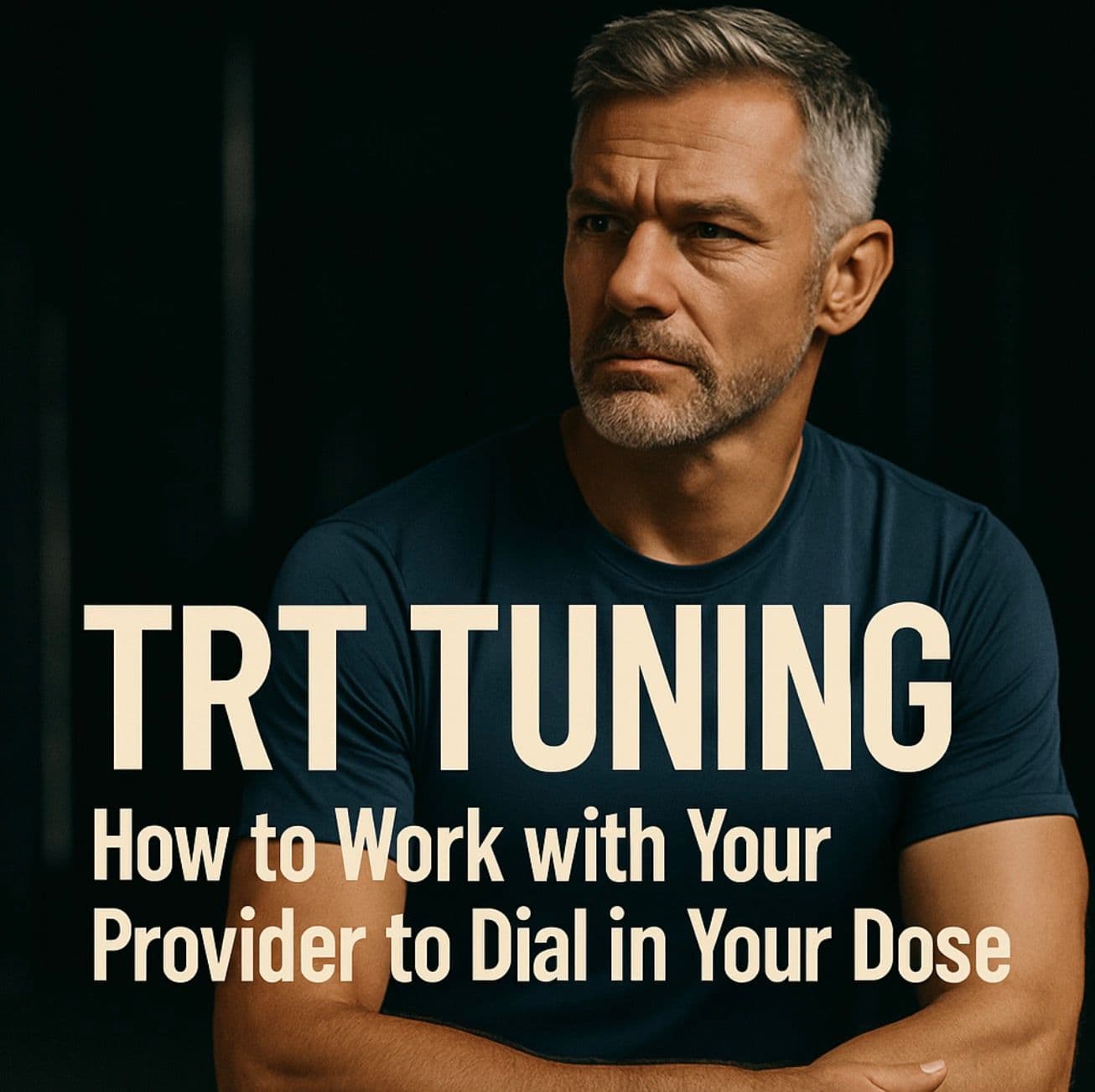
Here’s what you need to know about why dose adjustments happen, how to recognize when something’s off, and how to work with your provider to get dialed in.
Why Dose Adjustments Are Normal
Your provider typically starts you on a dose intended to be safe and effective, then adjusts based on your body’s response. Everyone metabolizes testosterone differently — factors like age, weight, health, activity level, and even genetics play a role.
Dose adjustments aren’t a sign that TRT “isn’t working.” They’re part of the process. You want a dose where symptoms improve, labs look good, and side effects are minimized. For a great overview of what to expect early on, check out The TRT Starter Pack: What I Wish I Knew Before Starting Therapy.
Signs Your Dose Might Be Too Low
If your dose is on the lower side, you may still experience many of the symptoms that prompted you to start TRT. Some common indicators include:
- Low energy or fatigue despite therapy
- Brain fog or trouble focusing
- Low mood or irritability
- Difficulty building muscle or recovering from workouts
- Low libido or sexual performance issues
These symptoms can overlap with other health concerns, so bloodwork is essential to confirm whether testosterone is still under-optimal.
Signs Your Dose Might Be Too High
On the flip side, too high a dose can produce its own set of problems. Watch for:
- Mood swings or increased irritability
- Acne, oily skin
- Water retention, bloating
- Elevated hematocrit or red blood cell counts
- Trouble sleeping, feeling overstimulated
You might also see elevated estrogen (estradiol) levels, which can cause symptoms like breast tenderness or swelling. If this happens, your provider may discuss options like aromatase inhibitors — here’s a helpful resource on when to take anastrozole with testosterone.
How to Work with Your Provider to Dial It In
Here’s how to fine-tune your dose safely and effectively:
1. Track Your Symptoms
Keep a journal (or use an app) to log how you feel week by week: energy, mood, libido, gym performance, sleep. This gives your provider real data beyond labs.
2. Stay Consistent with Your Protocol
Follow the prescribed dose and timing until the clinician managing your care advises a change. If the instructions use both milligrams and milliliters, confirm the conversion with this testosterone dose-versus-volume explanation or ask the prescribing clinician or pharmacist.
3. Get Regular Bloodwork
Labs are your guiding map. After starting TRT or changing a dose, retest in about 6-8 weeks. Learn more about how providers monitor labs on the AlphaMD platform in this Q&A.
4. Be Honest About Side Effects
Don’t shrug off acne, swelling, or mood changes. Your provider can only help if they know what you’re experiencing.
5. Be Patient
Your “sweet spot” might take a few tweaks. It often takes several weeks to feel the effects fully after a dose change.
The Bottom Line
Dialing in your TRT dose is a process, not a one-and-done setup. Needing adjustments isn’t failure — it means you and your provider are working together to find what actually feels optimal for you. With consistent communication, careful tracking, and lab monitoring, you can reach a place where your symptoms, energy, mood, and performance are balanced and stable.
If you have more questions, visit AlphaMD’s TRT Q&A archive where experts answer common questions about dosing, labs, and long-term therapy.
Frequently Asked Questions About TRT Dose Adjustments
How long does it take to feel a difference after a dose change?
Typically 4-6 weeks for noticeable changes; full adjustment may require up to 12 weeks.
What if I feel worse after increasing my dose?
This can happen if estrogen or other secondary hormones get pushed too high. Speak with your provider — often a small reduction or adjustment in dosing schedule restores balance.
Do I need bloodwork every time my dose changes?
Yes, when you make a meaningful change. It’s the only safe way to see how your body is responding internally.
Can TRT dose adjustments affect fertility?
Yes. TRT can suppress natural testosterone production and sperm count. If fertility is important, ask your provider about adding HCG — here’s a helpful article on whether HCG increases estrogen in males.
Is it safe to stay on TRT long-term?
For many men with documented low testosterone, yes — when carefully monitored. Regular labs help mitigate risks (hematocrit, estrogen, etc.).
Related Resources
- The TRT Starter Pack: What I Wish I Knew Before Starting Therapy
- Testosterone Replacement Therapy (TRT) 101: A Beginner’s Guide
- When to Take Anastrozole with Testosterone
- Does HCG Increase Estrogen Levels in Males?
- Ask Us Anything: TRT Topics