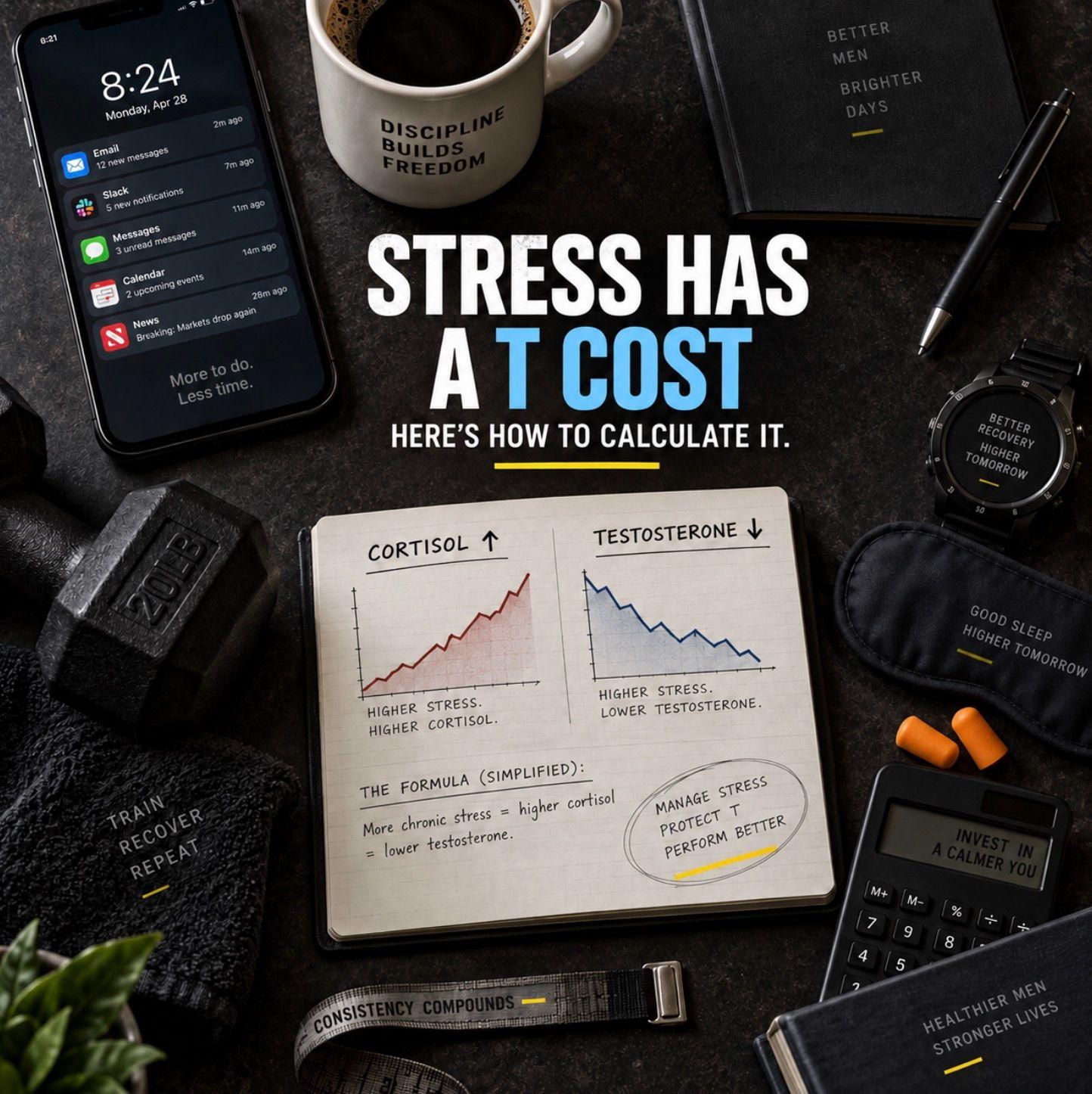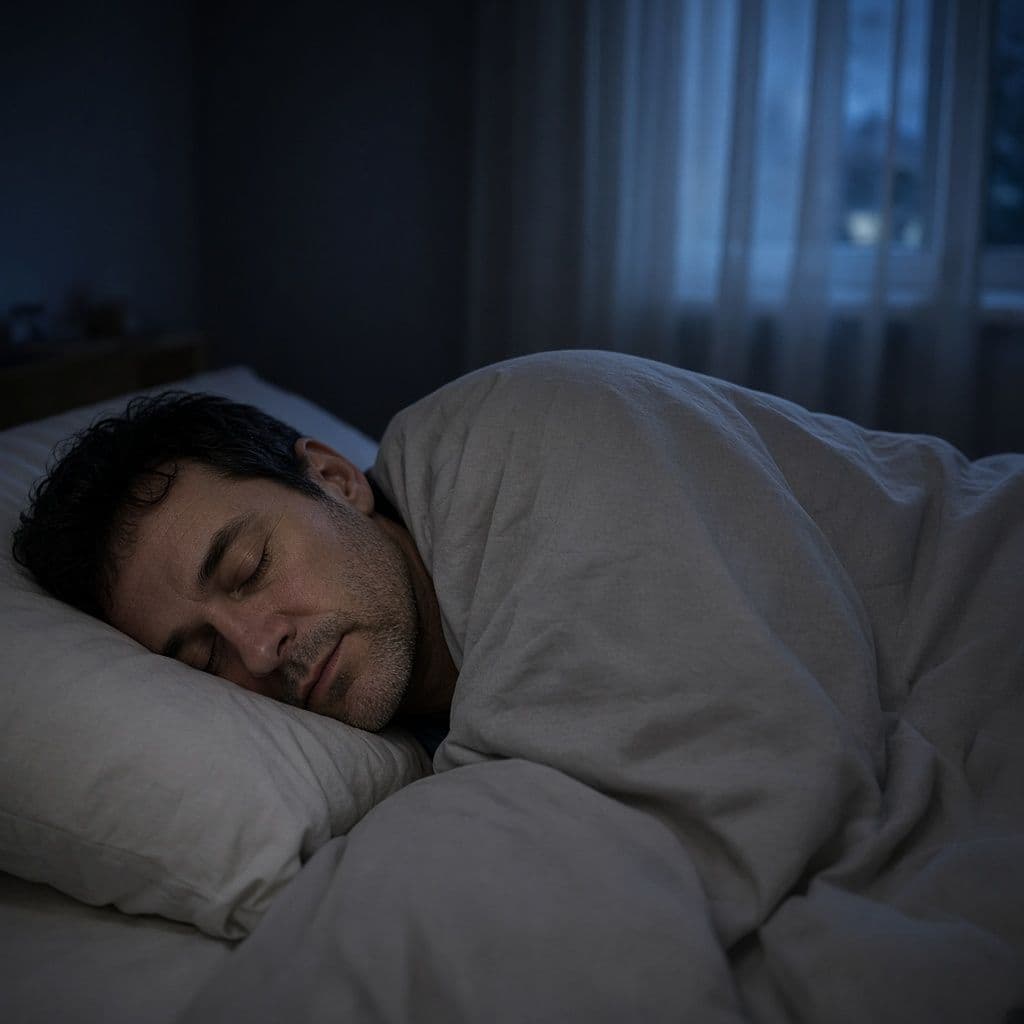
No study has shown that sleeping naked raises testosterone, and none has compared testosterone in men who sleep naked with men who sleep in clothes. What the evidence does support is indirect: sleep that is too short lowers testosterone, and a bedroom that is too hot makes sleep worse. If sleeping naked keeps you cool enough to sleep well, it may help in that roundabout way.
Understanding testosterone
In men, testosterone matters for sexual function and reproduction, and it also affects muscle mass and strength, body fat, bone density, and energy (Leproult and Van Cauter, JAMA 2011). Levels are shaped by several everyday factors, including how much you sleep and how much you weigh.
The theory behind sleeping naked and testosterone
The idea rests on two links: heat and the testicles, and heat and sleep.
- Higher scrotal temperature is known to harm sperm production, but that is not the same as lowering testosterone. In a cross-sectional study of 656 men at a fertility center, men who mostly wore boxers had 25% higher sperm concentration and 14% lower FSH (a pituitary hormone that drives sperm production) than men who wore tighter underwear. Underwear type was not linked to the other hormones measured, including testosterone, although blood was not always drawn in the morning, so a testosterone effect could have been missed (Mínguez-Alarcón et al., Hum Reprod 2018). For more on heat and sperm, see this article on sauna use and male fertility.
- In real-life conditions with bedding and clothing, heat exposure increases time awake and reduces deep (slow-wave) and REM sleep, according to a review of thermal effects on sleep (Okamoto-Mizuno and Mizuno, J Physiol Anthropol 2012). Sleeping with less on may help some people avoid overheating, but no study has tested whether that changes testosterone.
What the evidence shows
- Most of a man's daily testosterone release happens during sleep. In a small trial, 10 healthy men with an average age of 24 slept about 5 hours a night for one week. Their daytime testosterone fell from 18.4 to 16.5 nmol/L, roughly 10% lower than after a week of full sleep (Leproult and Van Cauter, JAMA 2011). The study was short and small, and the men were young.
- Sleep fragmentation and obstructive sleep apnea are associated with lower testosterone (same source). Anything that helps you get enough unbroken sleep may support normal levels, and a cooler bedroom is one way some people sleep better.
- No study has measured testosterone in men who sleep naked compared with men who sleep in clothes, so any direct effect is unknown.
Other factors affecting testosterone
- In a meta-analysis of 24 studies, weight loss from diet or bariatric surgery raised testosterone, and men who lost more weight saw larger rises (Corona et al., Eur J Endocrinol 2013). This piece on why men's testosterone levels are declining covers other lifestyle factors.
- Sleep apnea is one condition linked to low testosterone. Low testosterone itself is diagnosed only when symptoms are present and total testosterone is below 300 ng/dL on two separate early-morning tests (AUA guideline statements 1 to 3, Moderate Recommendation, Grade B). If you have symptoms, morning blood tests are how low testosterone is confirmed.
Bottom line
Sleeping naked has not been shown to raise testosterone. Getting enough sleep does matter: a week of 5-hour nights lowered daytime testosterone by about 10% in young men. Sleeping cool may improve your sleep, but its effect on testosterone has not been studied.
If you have symptoms of low testosterone, AlphaMD providers review lab results before any treatment decision; you can read about testosterone replacement therapy at AlphaMD.