
Sexual symptoms are the most specific determinants of low testosterone (T) observed during adulthood. In this narrative review, we summarize the most important evidence supporting the positive relationships between endogenous T levels and sexual activity in the adult male, by using preclinical and clinical observations. In addition, we also report an update of our previous meta-analysis evaluating the effects of T treatment (TRT) on sexual functioning in subjects with T deficiency. Available data indicate that TRT of symptomatic hypogonadal men can improve several aspects of sexual life, including erection. However, the effect is rather modest and lower in subjects with associated metabolic conditions. The specific observed effects are similar to those derived from lifestyle intervention. Since TRT might result in body composition improvement, it is reasonable to suppose that an initial treatment with T can improve the willingness of hypogonadal subjects to perform physical exercise and to adhere to a healthier behavior. Similar data were derived from animal models. However, it should be important to recognize that lifestyle modifications should be the first step to promote weigh reduction. TRT can be combined with lifestyle interventions only in symptomatic hypogonadal subjects especially in the presence of comorbid metabolic conditions.
https://www.sciencedirect.com/science/article/abs/pii/S1521690X22000021
TRT and Sexual Function - Androgens
People are asking
Related questions
Does TRT benefit erection quality?
Yes, generally the three main reasons people start TRT are: Energy/motivation, fat loss issues/muscle loss, and libido/erectile function.
See the full answerNo libido increase after starting TRT, probably even slight drop due to balls shrinking and no longer needing regular…
Most instances of low libido are not hormonal. Most low libido is emotional/paychological, stress induced, due to sleep apnea, or relationship Issues. If TRT…
See the full answerAside from high/low E2, what else are the primary reasons a person on TRT would have poor mood and low energy?
Hormonally speaking, it could relate to the neurosteroids pregnenolone and DHEA-S. These act directly on the brain and are associated with mood and cognition.…
See the full answerKeep reading
Related articles
 Can TRT Improve Orgasms? What Trials Show in Men With Low Testosterone
In men with confirmed low testosterone, testosterone replacement therapy (TRT) can improve orgasm and sexual satisfaction as well as sex drive. A 2017 meta-analysis of 14 placebo-controlled trials (2,298 men) found improvements in erectile function, ...
Read the article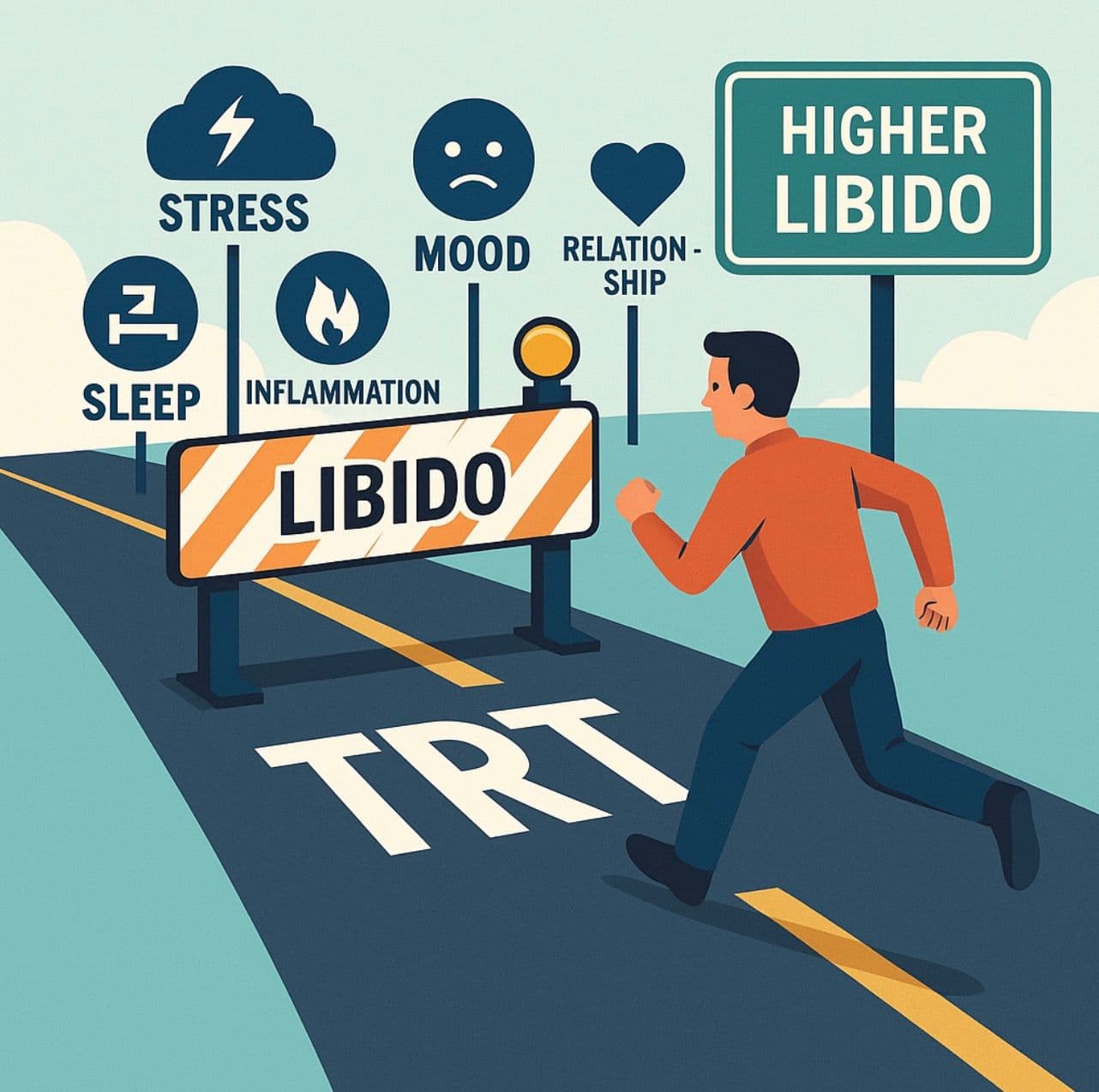 When TRT Doesn't Fix Libido: 7 Other Causes to Check
If your testosterone is back in range on TRT but your sex drive is still low, the cause may be something testosterone doesn't treat. A normal level doesn't guarantee normal desire. Medications, depression, the relationship, erection problems, sleep a...
Read the article
Get $30 off your first month
Enter your email for $30 off your first month, other discounts, and more about TRT.
Legal disclaimer
This website is a repository of publicly available information and is not intended to form a physician-patient relationship with any individual. The content of this website is for informational purposes only. The information presented on this website is not intended to take the place of your personal physician's advice and is not intended to diagnose, treat, cure, or prevent any disease. Discuss this information with your own physician or healthcare provider to determine what is right for you. All information is intended for your general knowledge only and is not a substitute for medical advice or treatment for specific medical conditions. The information contained herein is presented in summary form only and intended to provide broad consumer understanding and knowledge. The information should not be considered complete and should not be used in place of a visit, phone or telemedicine call, consultation or advice of your physician or other healthcare provider. Only a qualified physician in your state can determine if you qualify for and should undertake treatment.