Testosterone replacement therapy can increase sexual desire and the frequency of sexual thoughts in men whose testosterone was low. Research does not show that TRT creates new sexual preferences, changes the content of a man's fantasies, or makes fantasies more vivid.
That distinction matters. Clinical trials measure desire, thoughts, and sexual activity. They generally do not ask what someone imagines or whether the content changed after treatment.
What have testosterone trials actually measured?
Some testosterone studies include questionnaire items about sexual thoughts or fantasies. Those items measure frequency as part of libido. They do not analyze the scenarios, preferences, or level of detail in those thoughts.
In the Testosterone Trials sexual-function study, 470 men aged 65 or older had low libido and testosterone below 275 ng/dL. One year of testosterone gel improved 10 of 12 measures of sexual activity compared with placebo. Sexual desire improved as testosterone and estradiol rose, but there was no single hormone level at which desire switched on.
The study supports a return of sexual interest in some men with low testosterone. It does not show that testosterone changes sexual orientation, creates a specific fantasy, or alters what a man finds attractive.
How quickly can sexual thoughts increase?
Sexual interest can change within the first several weeks, although the timeline comes from small studies and should not be treated as a promise.
A 2009 study of 40 men with low testosterone reported that sexual thoughts and fantasies increased and reached a plateau after about three weeks of testosterone injections. Morning erections and sexual interest changed on a similar timeline. The study measured how often thoughts occurred, not their content or vividness.
A review of testosterone-effect timelines concluded that sexual interest often begins changing after about three weeks and may level off by six weeks. Those are typical study observations. An individual man's response can be faster, slower, smaller, or absent.
Another randomized study with extended follow-up found that improvements in sexual thoughts, fantasy, and desire were maintained during longer treatment. That result means the measured increase in sexual interest did not quickly disappear. It does not establish that every patient will maintain a permanently higher libido.
Desire and erections are not the same outcome
Testosterone has produced more consistent improvements in desire than in erectile function.
The TRAVERSE Sexual Function Study included 1,161 men aged 45 to 80 with low libido, symptoms of hypogonadism, and two testosterone measurements below 300 ng/dL. Testosterone gel improved sexual activity and desire over two years compared with placebo. It did not improve erectile function.
A 2025 analysis of the T4DM trial evaluated 792 men aged 50 to 74 who were at high risk of type 2 diabetes or had newly diagnosed diabetes. Participants received a lifestyle program plus testosterone undecanoate or placebo. Testosterone improved several sexual-function scores, with the largest effects on desire in certain subgroups. Clinically significant improvement occurred in 10% of men for sexual desire and 3% for erectile function. This population and treatment regimen differ from routine TRT patients, so the percentages should not be applied universally.
A 2026 randomized trial in carefully selected prostate cancer survivors reached a similar short-term distinction. The trial enrolled 136 men who had undergone radical prostatectomy for organ-confined, low-grade cancer, had undetectable PSA for at least two years, and had symptomatic low testosterone. Twelve weeks of testosterone cypionate improved sexual activity and desire compared with placebo, while erectile function did not change.
No participant had biochemical recurrence during those 12 weeks. The trial was too short and too small to establish long-term cancer safety, and its findings do not apply to men with high-grade cancer or those treated with radiation or androgen deprivation therapy.
Can TRT create new fantasies or preferences?
No clinical trial has shown that TRT creates new sexual preferences or changes the subject of a person's fantasies.
A stronger sex drive can make sexual thoughts more noticeable or more frequent. That may feel like a change in sexuality even when the underlying interests have not changed. The evidence cannot tell us whether a particular fantasy is new, newly noticed, or simply occurring more often.
Claims that testosterone reveals a hidden "true" sexuality go beyond the research. Sexual interests are shaped by many biological, psychological, relationship, and cultural factors. A hormone level cannot explain them on its own.
What is a normal increase in sexual interest?
Thinking about sex more often after treatment can fall within the expected return of libido, especially when low desire was part of the original symptoms. A higher sex drive is not automatically a problem.
The practical question is whether the change fits comfortably into the rest of your life. A conversation with the clinician overseeing your treatment is appropriate when sexual thoughts or urges:
- interfere with work, sleep, relationships, or daily responsibilities
- feel compulsive or difficult to control
- cause substantial distress
- appear alongside racing thoughts, unusually little need for sleep, impulsive spending, intense irritability, or other major mood changes
The testosterone cypionate prescribing information lists increased or decreased libido, anxiety, depression, hypomania, and irritability among reported reactions. It does not provide a reliable rate for increased sexual preoccupation at replacement doses.
How should couples handle a desire mismatch?
An increase in one partner's libido does not obligate the other partner to match it. Open discussion can help couples separate a medical change from assumptions about attraction, rejection, or relationship quality.
Useful questions include:
- Has sexual interest changed, or only the frequency of sexual thoughts?
- Is either partner feeling pressured, avoided, or confused?
- Are there erection problems, pain, medication effects, stress, or relationship issues that testosterone will not fix?
- Would a clinician or qualified sex therapist help the couple discuss the mismatch?
Consent and personal boundaries remain unchanged regardless of hormone levels. Distressing, nonconsensual, or illegal thoughts should be discussed with a qualified mental health professional, especially if there is any risk of acting on them.
Does a stronger sex drive mean the TRT dose is correct?
No. Libido is one treatment response, not a dosing tool.
A licensed clinician evaluates symptoms together with follow-up testosterone levels, safety labs, side effects, health history, and the reason treatment was started. A dramatic increase in sexual drive does not prove that the dose is optimal. Low desire after testosterone normalizes also does not automatically mean the dose should be increased.
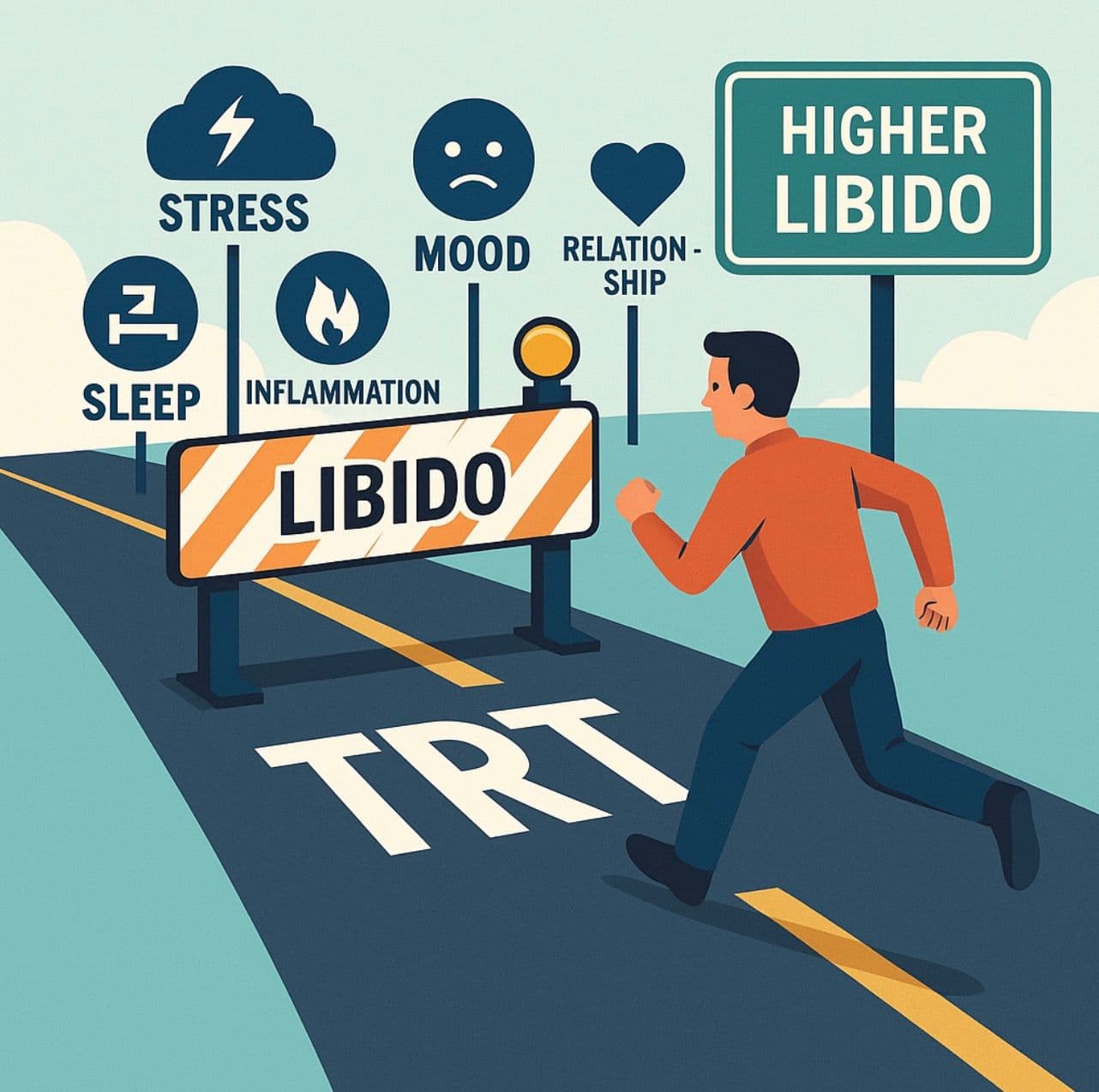
Sleep, stress, depression, relationship strain, alcohol, medications, vascular health, and other medical conditions can all affect sexual function. The article on why TRT may not fix low libido covers several nonhormonal contributors. For a broader treatment timeline, see how long testosterone takes to work.
Questions readers ask
Is it normal to think about sex more after starting TRT?
It can be. Studies in men with confirmed low testosterone show that treatment can increase sexual desire and the frequency of sexual thoughts. The size and timing of the change vary.
Does TRT change what you are attracted to?
There is no clinical evidence that TRT changes sexual orientation or creates a particular attraction. Trials measure the amount of sexual interest, not the content of attraction or fantasy.
Can TRT make fantasies more vivid?
That has not been established. Studies ask how often sexual thoughts or fantasies occur, but they have not shown that testosterone makes them more detailed or vivid.
Will TRT fix erectile dysfunction if desire improves?
Not necessarily. Large trials have found that testosterone can improve desire and sexual activity without meaningfully improving erectile function. Erections also depend on vascular, neurological, psychological, medication-related, and relationship factors.
When should I tell my clinician about a libido change?
Mention any major or uncomfortable change, particularly if it disrupts daily life or occurs with impulsivity, little need for sleep, aggression, or other mood symptoms. Do not change a prescribed dose without speaking with the clinician overseeing your care.
Bottom line
TRT can increase sexual desire and the frequency of sexual thoughts in men with confirmed low testosterone. Research does not show that it creates new preferences or changes the content or vividness of fantasies. A change that feels compulsive, distressing, disruptive, or connected to major mood symptoms deserves a conversation with a licensed clinician or qualified mental health professional.